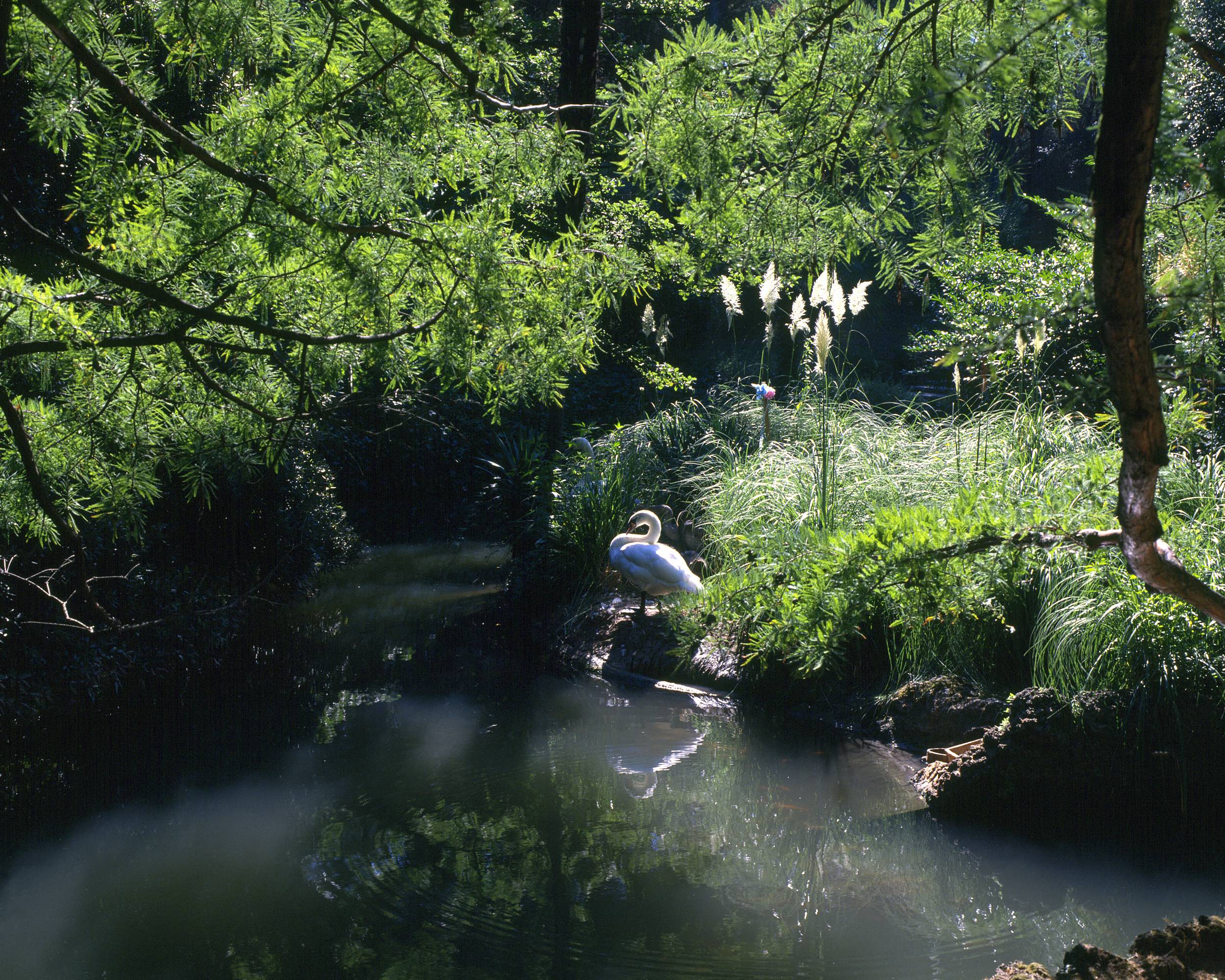
The sports complex, dating back to the 1920s, is nestled in the picturesque park that stretches between the historic Tettuccio and Torretta spas.
Its privileged location makes it a place of special charm, in perfect harmony with the architectural elegance of Montecatini Terme.
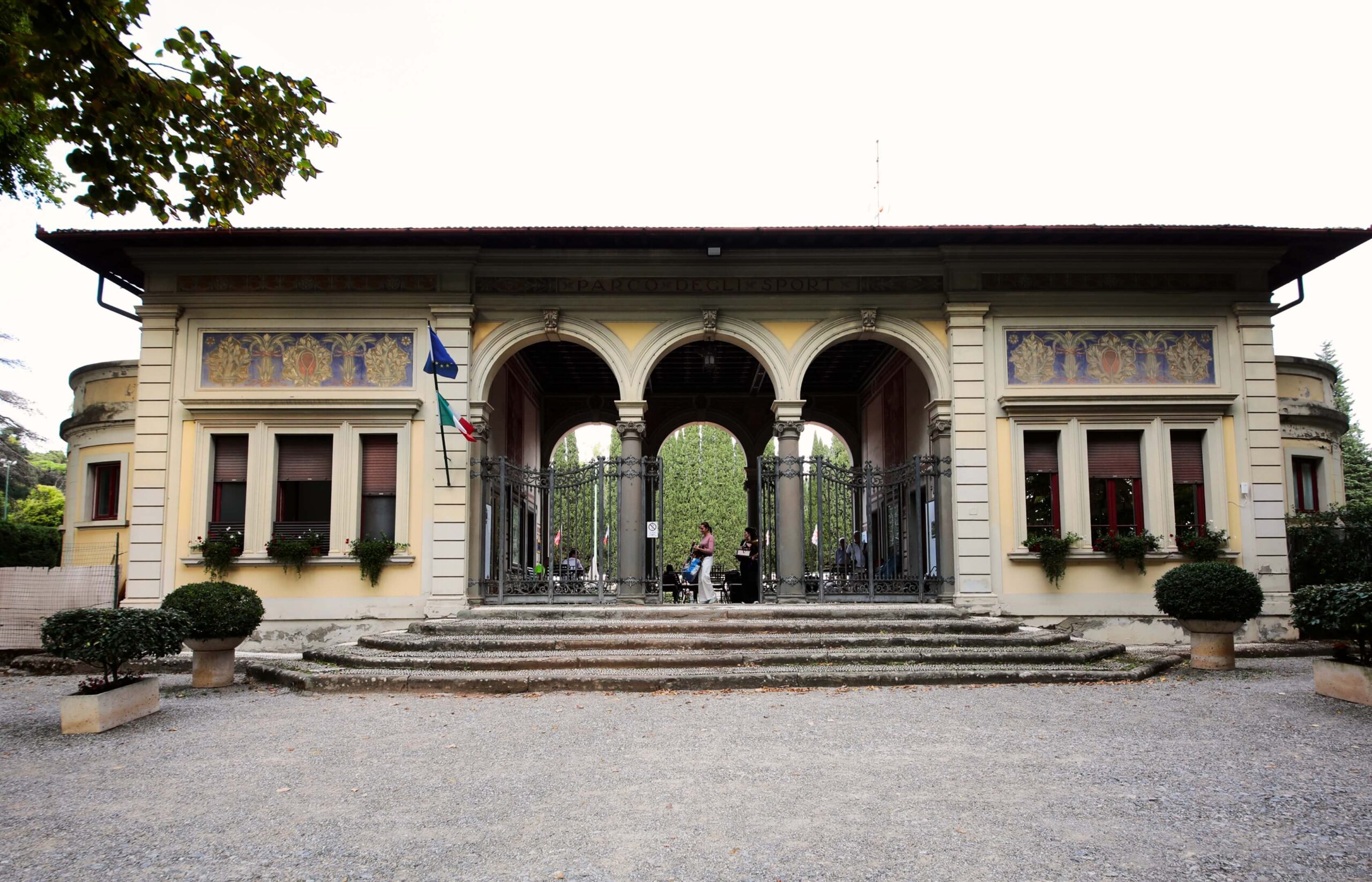
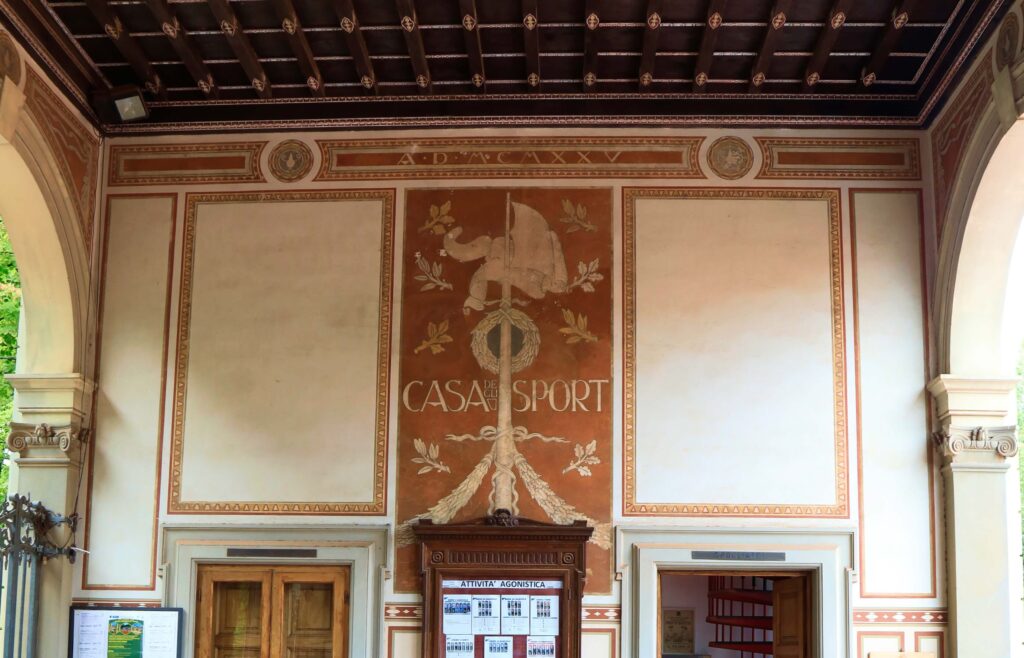
Ugo Giovannozzi’s monumental entrance.
Access to the sports area is through an elegant terraced pavilion, embellished by a scenic staircase. The entrance was designed by architect Ugo Giovannozzi, one of the most prominent figures in spa town planning at the time.
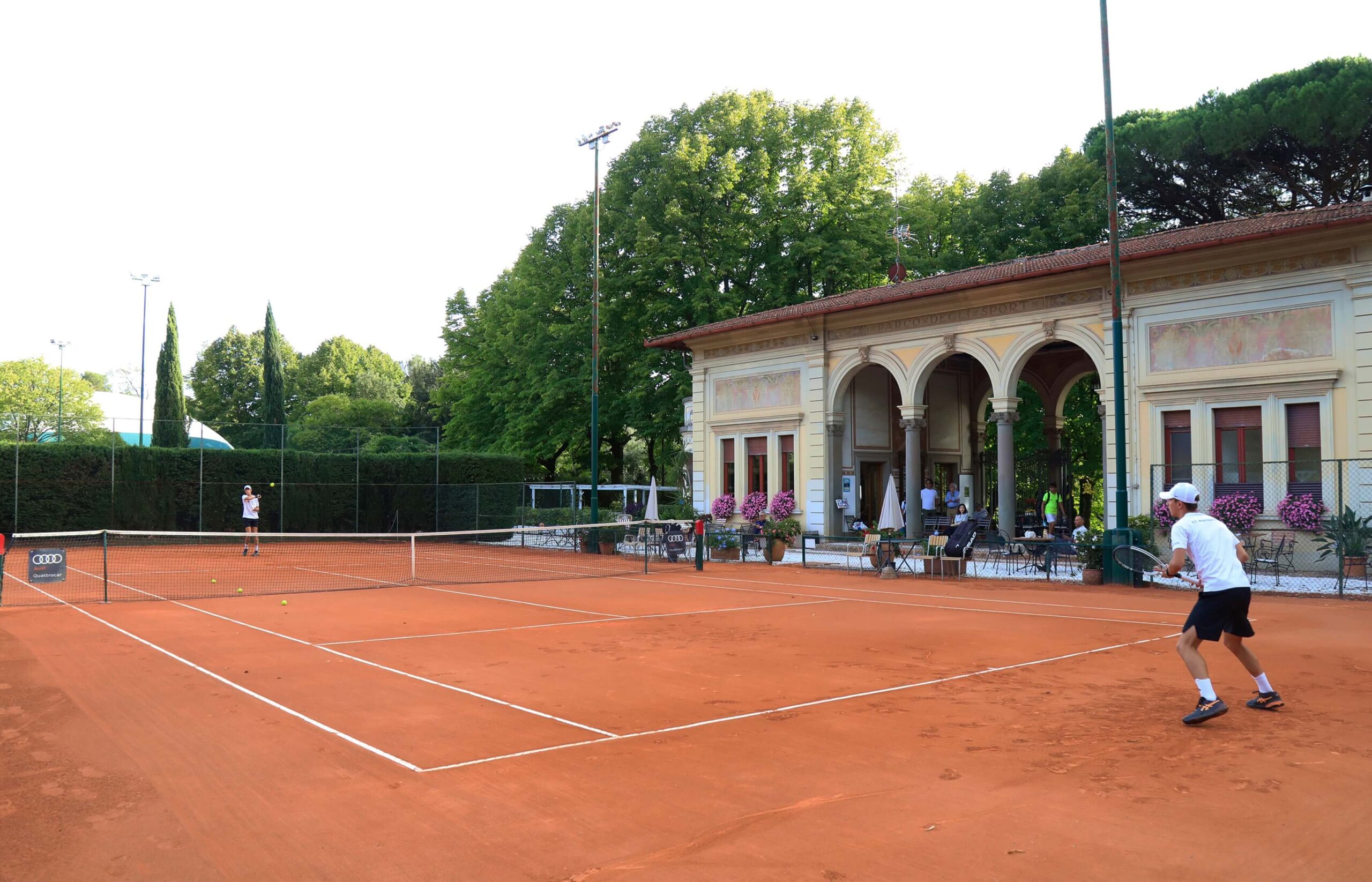
The clay tennis courts
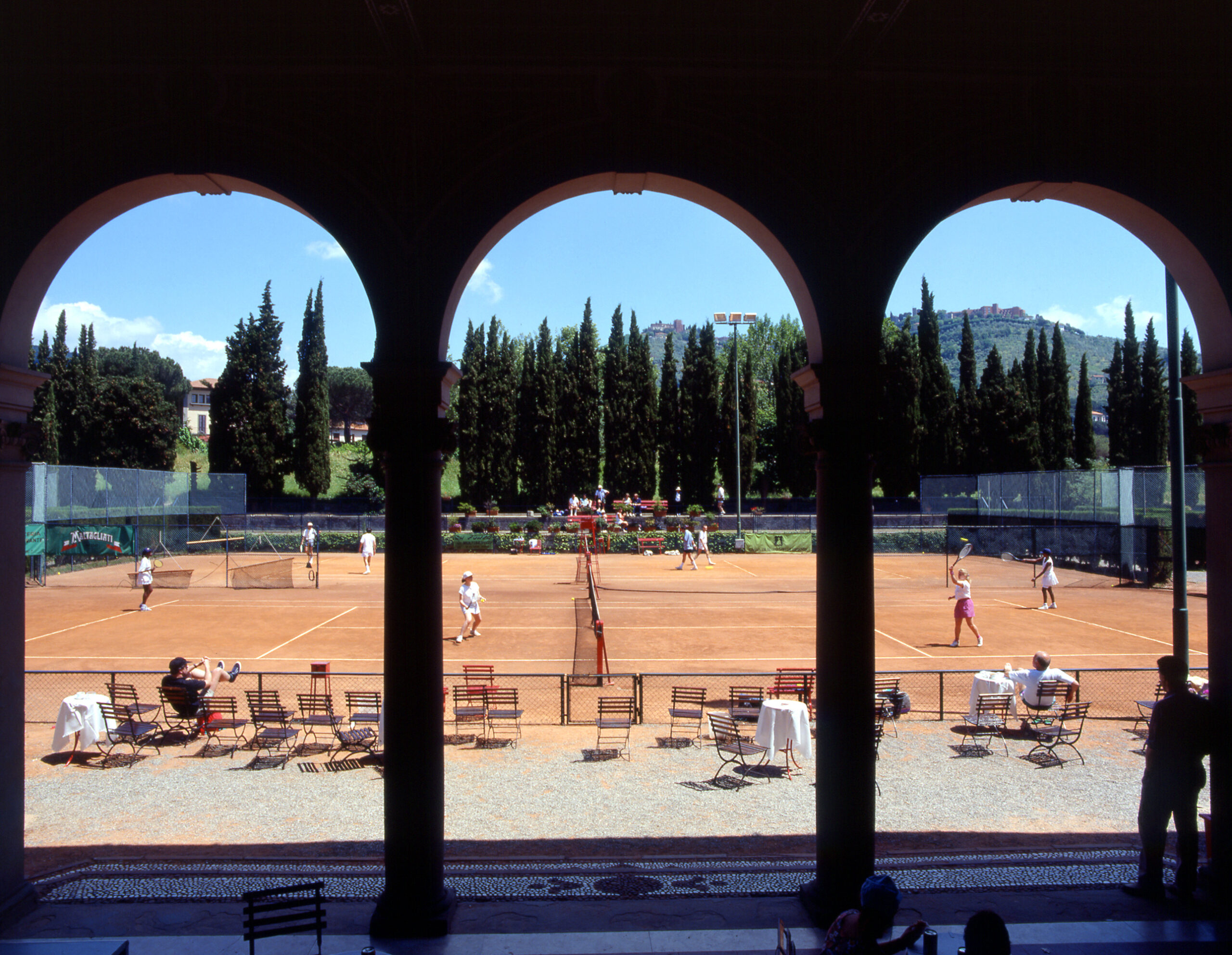
The heart of the complex is four clay tennis courts, surrounded by greenery and designed to blend harmoniously with the landscape and architectural context of the area.
A sports landmark from the past
Before World War II, this facility was considered among the best in Italy for quality, functionality and location. A symbol of the sporting excellence and elegance that characterized Montecatini in the heyday of its spas.
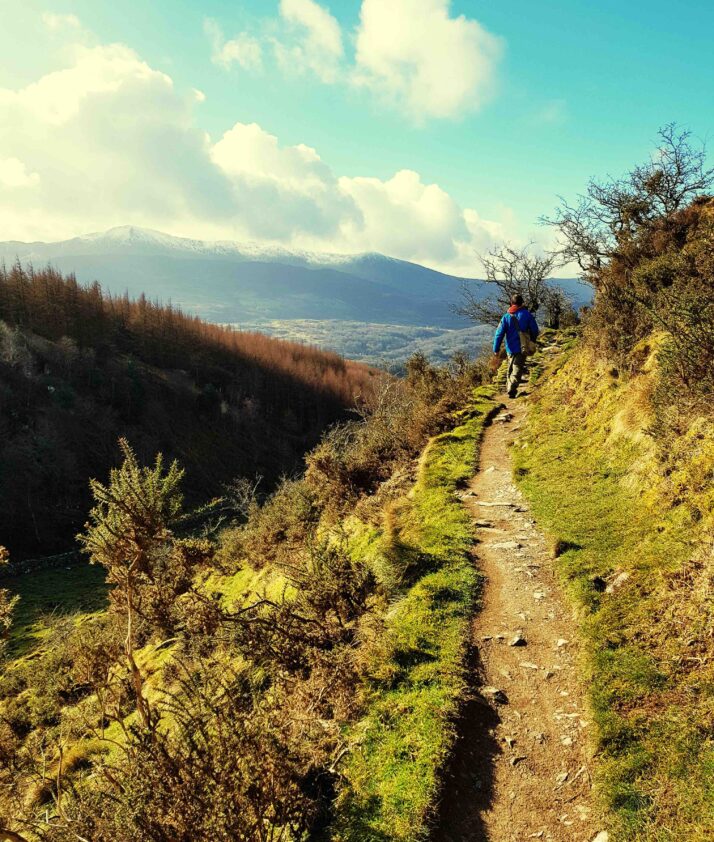
The territory of Montecatino lends itself magnificently to exploration: panoramic paths wind through centuries-old olive groves and lush vineyards, offering breathtaking views of the Valdinievole.
A journey among the historic Montecatini spas
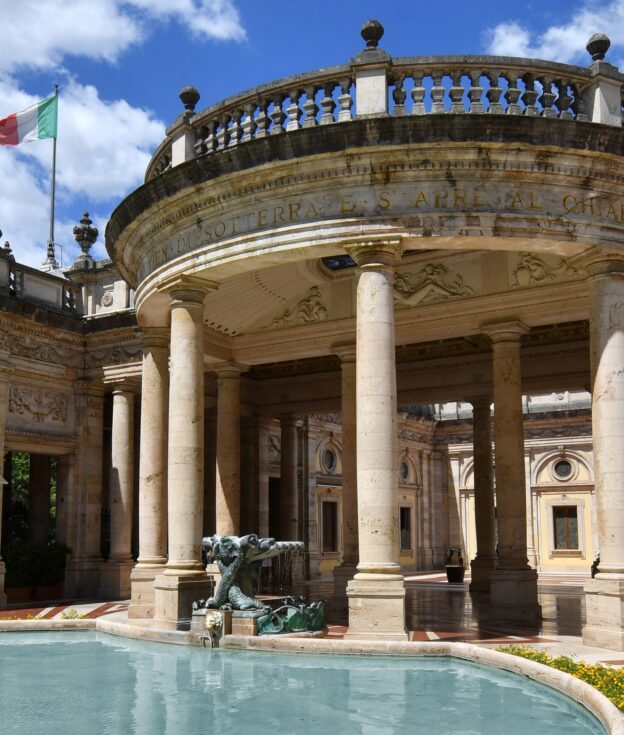
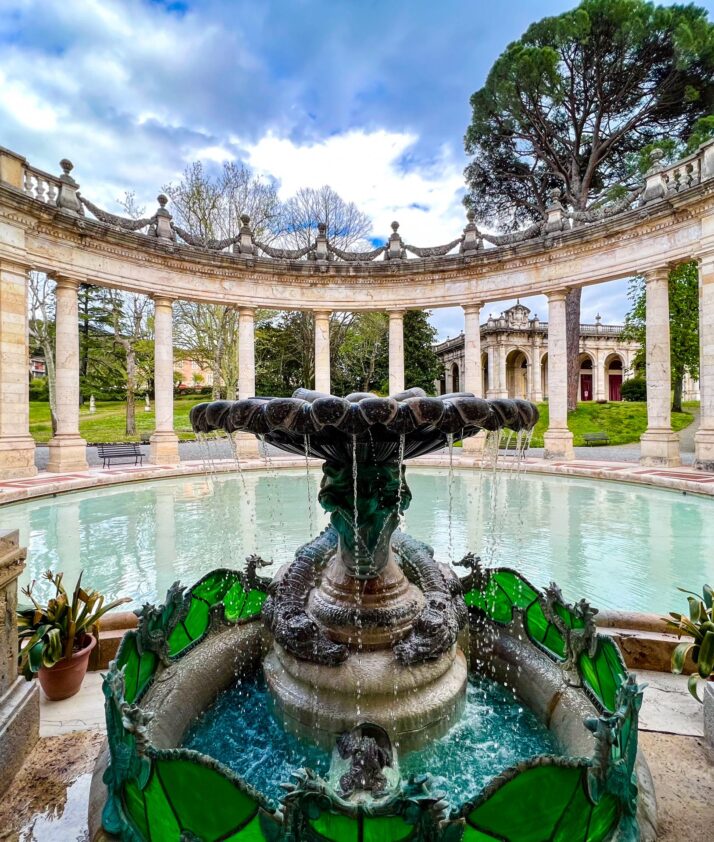
To stroll through Montecatini’s historic spas is to embark on a journey through time, where water becomes not only a source of well-being but also the inspiring muse of majestic architecture and refined decorations.
Great SPA towns of Europe: Montecatini Terme is a UNESCO world heritage site
Since July 24, 2021, Montecatini Terme has officially become part of an extraordinary cultural project: the Great Spa Towns of Europe, recognized as a UNESCO World Heritage Site.
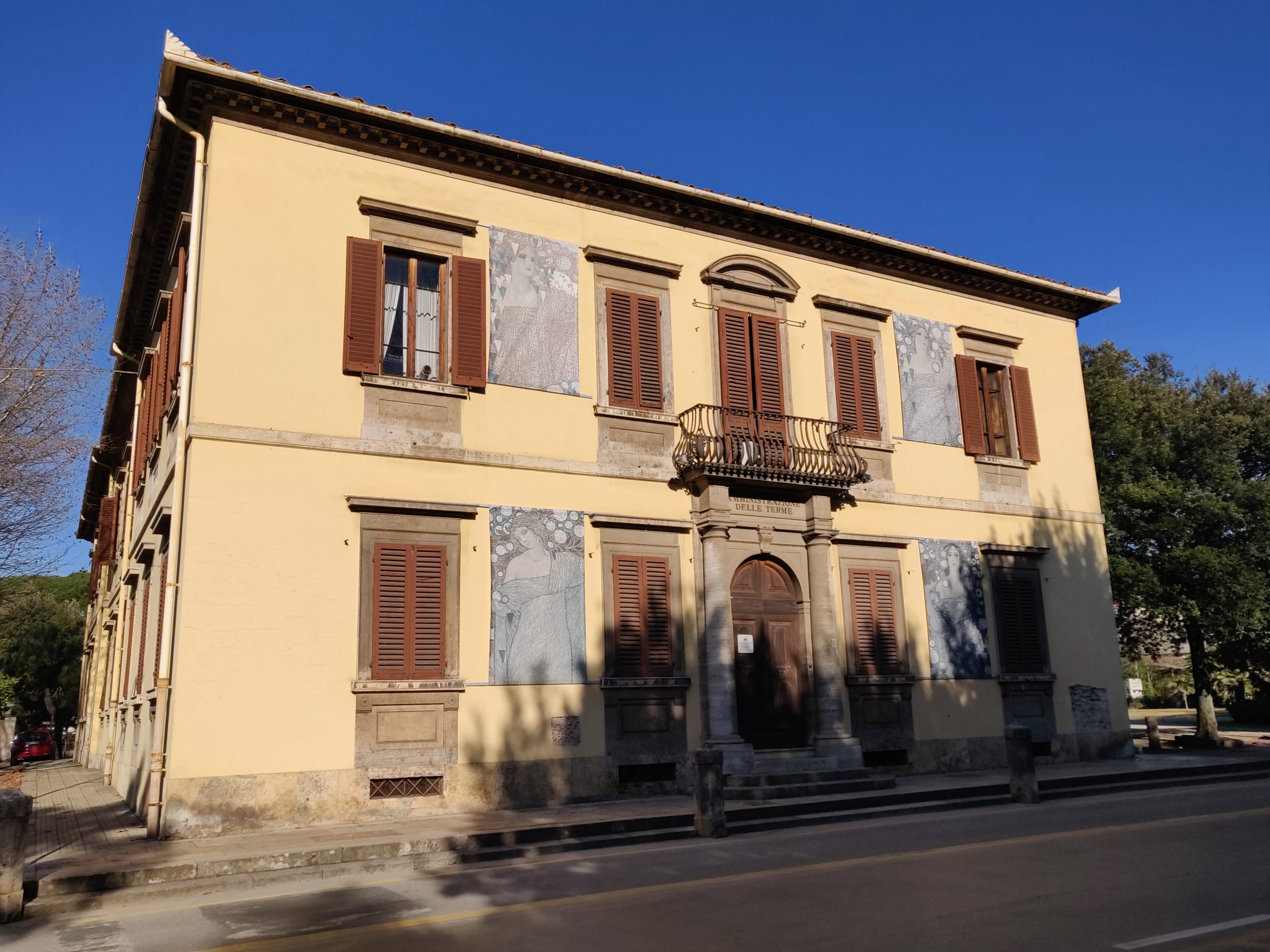
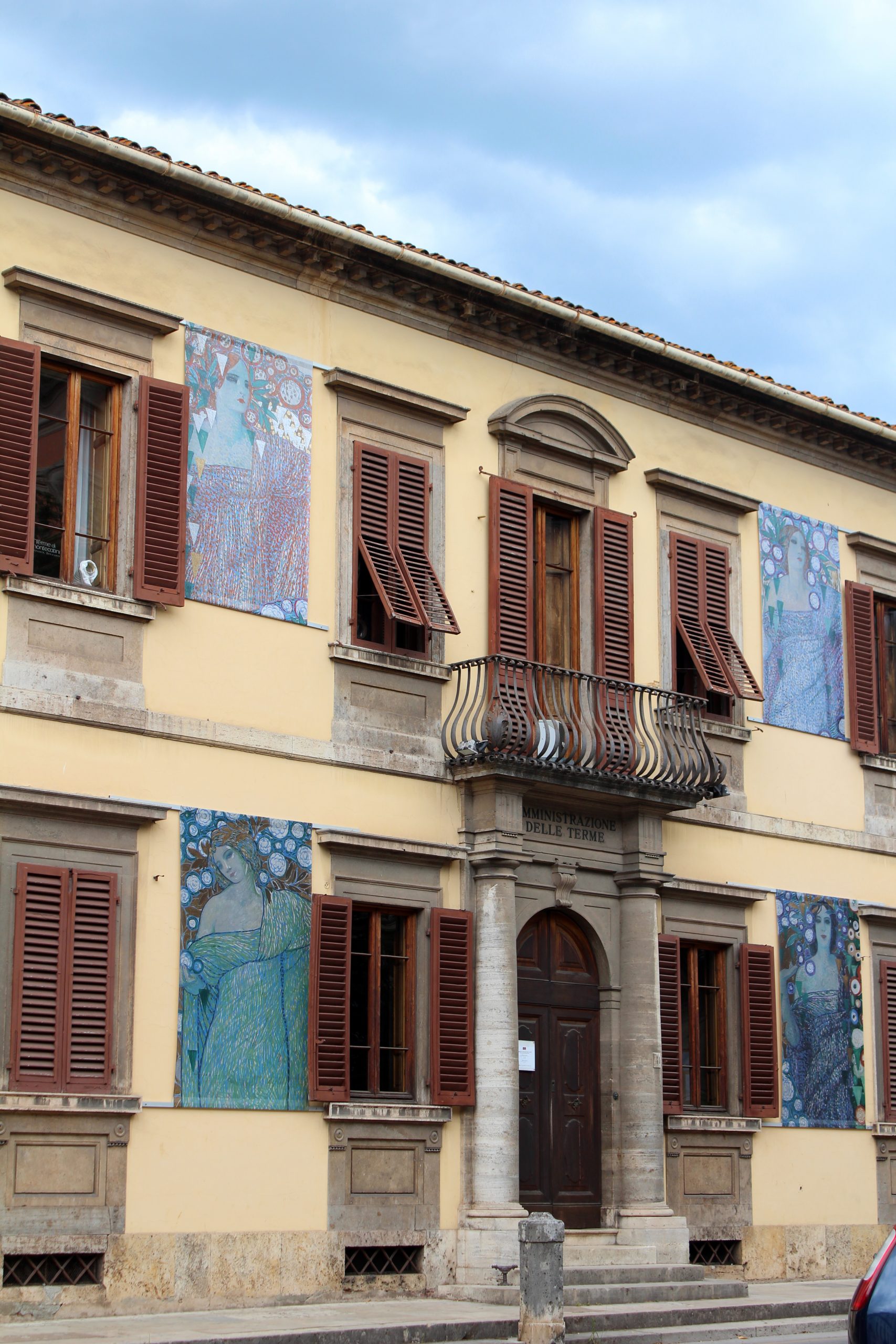
Overlooking Viale Verdi, stands the Palazzina Regia, a fine 18th-century residence that tells the aristocratic and spa history of the city.
Built in 1782 and designed by architect Niccolò Gasparo Paoletti, the building was desired by the Habsburg-Lorraine family as a summer residence during their stays at the spa.
A neoclassical jewel among spas and power
The Palazzina Regia is a splendid example of Tuscan neoclassical architecture. It has two floors, each with five rooms, and features a travertine facade punctuated by Doric columns and ornamental friezes. Paoletti, who had already authored the restoration of the Terme Tettuccio and the construction of the Terme Leopoldine, designed a building that combines elegance and functionality, perfectly inserted in the monumental context of the city.
From royal residence to spa headquarters
Over time, the Palazzina has undergone several transformations. Between 1919 and 1920, engineer Ugo Giovannozzi oversaw its restyling to house the General Management of the Spa Society. The interiors were embellished with stucco and decorations inspired by the theme of water, a key element of the city’s identity.
The future: a museum of thermalism
In 2017, the Municipality of Montecatini acquired the building with the ambitious goal of transforming it into a museum of thermalism. A project that aims to enhance the city’s cultural heritage and offer visitors an immersive journey through history, science and architecture.
Visit the Palazzina Regia
A symbol of Montecatini Terme’s historical prestige, the Palazzina Regia is an essential stop for those who wish to discover the aristocratic and spa-like soul of the city. Whether you are an architecture enthusiast, history lover or curious urban explorer, this elegant building will enchant you with its understated beauty and centuries-old history.
Vacation ideas
Outdoor Montecatini: between relax and discovery
The territory of Montecatino lends itself magnificently to exploration: panoramic paths wind through centuries-old olive groves and lush vineyards, offering breathtaking views of the Valdinievole.
A journey among the historic Montecatini spas
To stroll through Montecatini’s historic spas is to embark on a journey through time, where water becomes not only a source of well-being but also the inspiring muse of majestic architecture and refined decorations.
Great SPA towns of Europe: Montecatini Terme is a UNESCO world heritage site
Since July 24, 2021, Montecatini Terme has officially become part of an extraordinary cultural project: the Great Spa Towns of Europe, recognized as a UNESCO World Heritage Site.
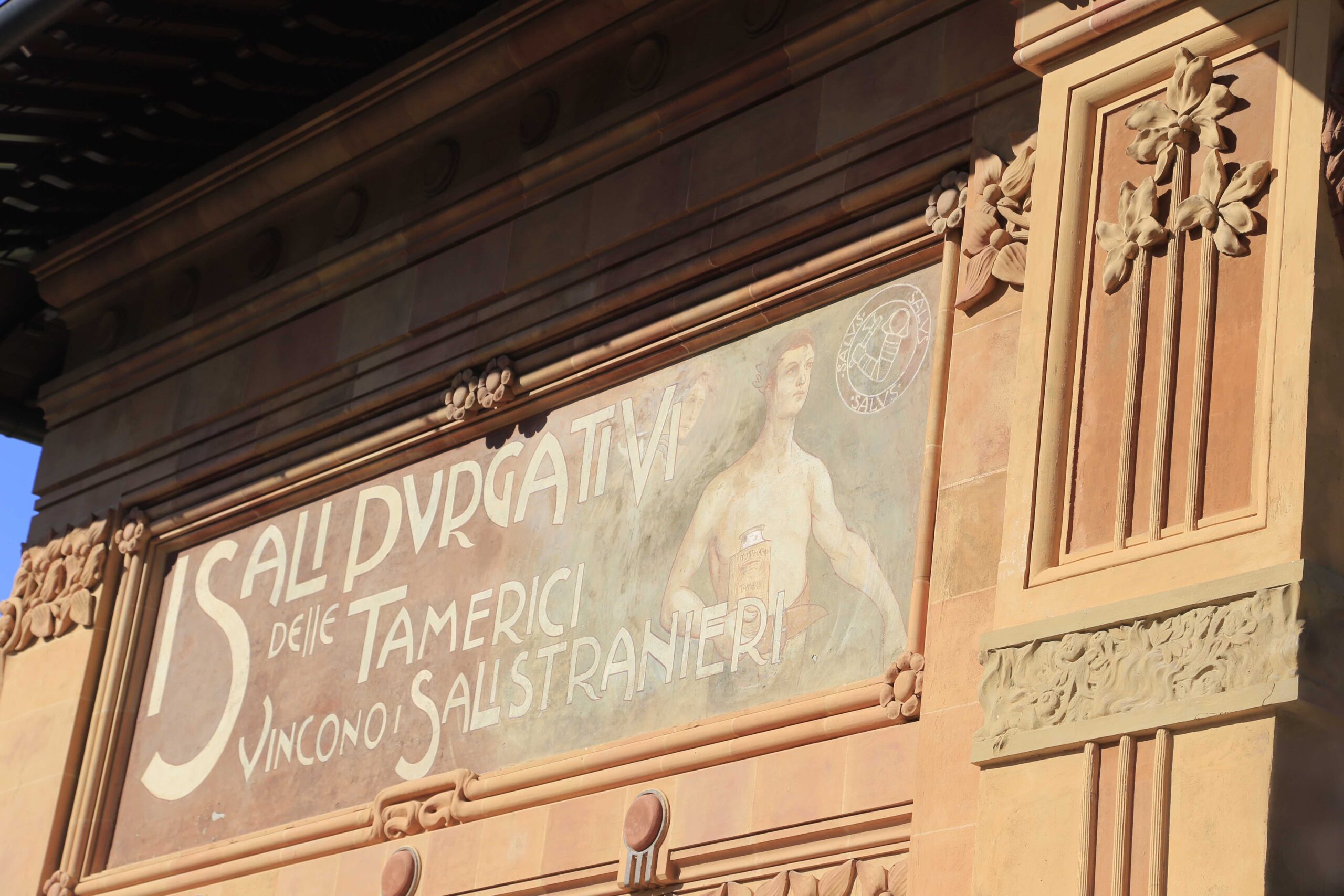
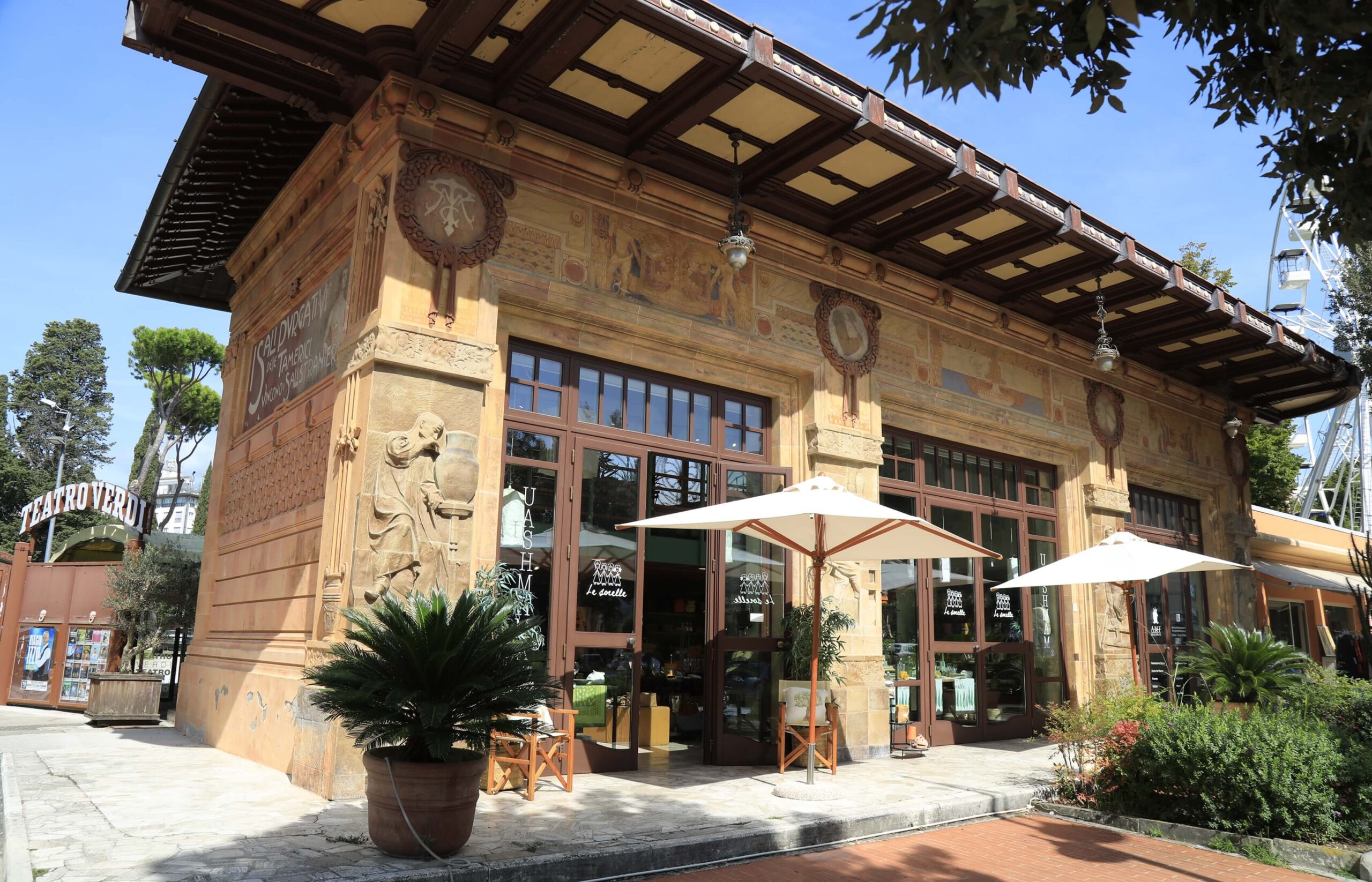
Located along the prestigious Viale Verdi, in front of the Verdi Theater, the Tamerici Salts Pavilion is one of the finest examples of Art Nouveau architecture in Montecatini Terme.
Built in 1903 and designed by architect Giulio Bernardini, the building was conceived as a sales outlet for the thermal salts extracted from the Tamerici spring, which were then highly prized for their therapeutic properties.
A unique example of floral style
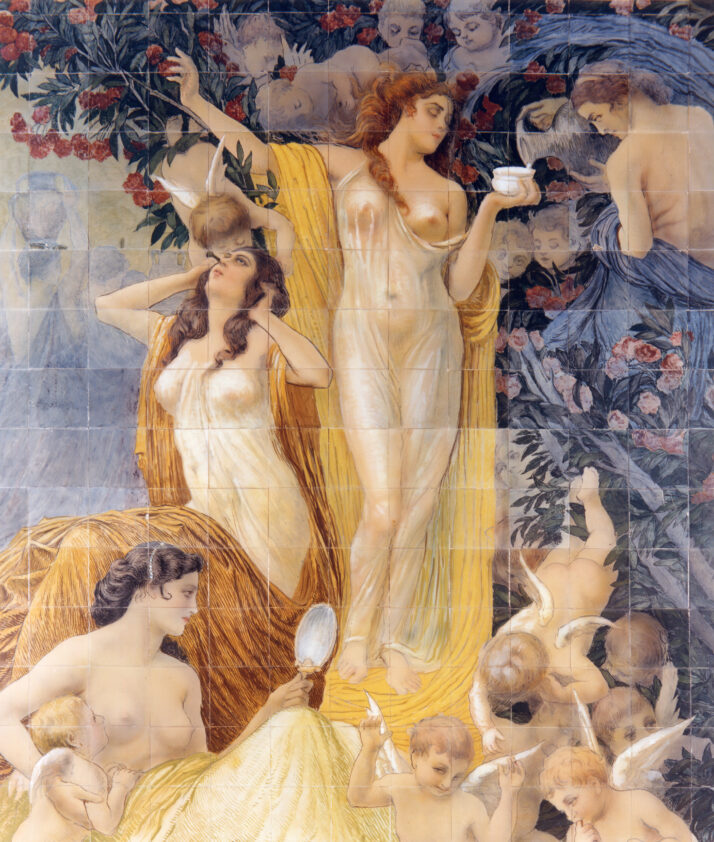
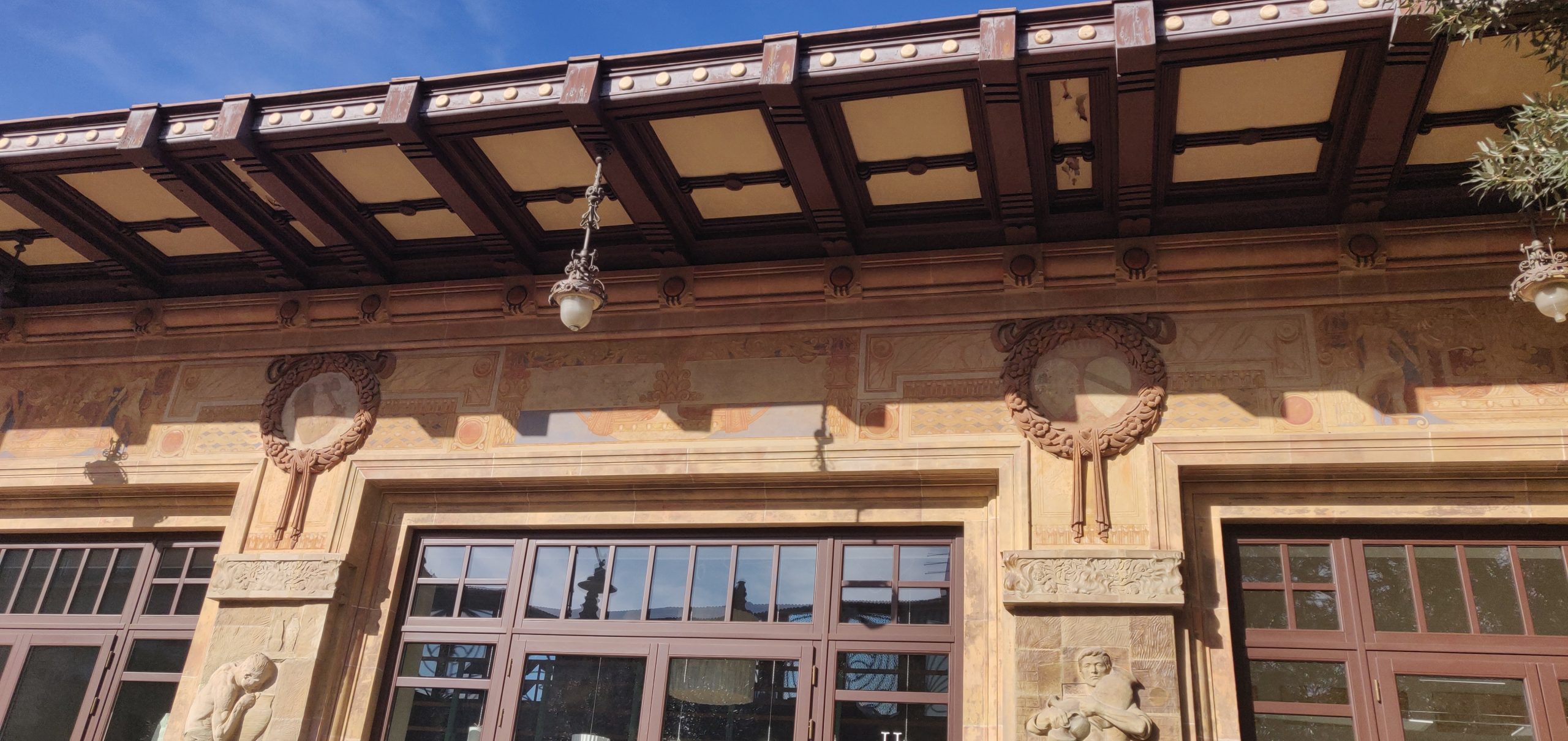
The Pavilion is distinguished by its rich artistic decoration, which blends floral and symbolic elements typical of Art Nouveau. The main facade has three rectangular openings, framed by decorative pillars covered with stoneware panels modeled by sculptor Domenico Trentacoste.
These bas-reliefs, originally intended for the booth of the Florence-based manufactory “The Art of Ceramics” for the 1902 Turin International Exposition, depict the stages of ceramic work: the artist, the turner, the decorator, and the kiln worker.
The pictorial frieze under the eaves, the work of Galileo Chini, depicts putti and floral entanglements, while the phytomorphic decorations on the corner pilasters and side facades, stylized to the limit of geometrism, complete the harmony of the whole.
A building designed to be admired at 360 degrees
Although designed primarily as a decorative backdrop on Verdi Avenue, the Pavilion was conceived to be appreciated from all angles. The ornamentation on all four elevations testifies to the intent to create a visually striking building, both from the main street and from the gardens behind.
A testimony to the golden age of thermalism
Today, the Tamerici Salts Pavilion stands as a valuable testimony to the golden age of thermalism in Montecatini Terme and the influence of Art Nouveau in the city. Although its original function has changed over time, the building continues to be an architectural and cultural landmark, attracting visitors and lovers of art and history.
Vacation ideas
Outdoor Montecatini: between relax and discovery
The territory of Montecatino lends itself magnificently to exploration: panoramic paths wind through centuries-old olive groves and lush vineyards, offering breathtaking views of the Valdinievole.
A journey among the historic Montecatini spas
To stroll through Montecatini’s historic spas is to embark on a journey through time, where water becomes not only a source of well-being but also the inspiring muse of majestic architecture and refined decorations.
Great SPA towns of Europe: Montecatini Terme is a UNESCO world heritage site
Since July 24, 2021, Montecatini Terme has officially become part of an extraordinary cultural project: the Great Spa Towns of Europe, recognized as a UNESCO World Heritage Site.
Tuscany, with its gentle rolling hills, rows of vines tracing geometries across the landscape, and olive groves glistening in the sun, tells a millennia-old story of agriculture and deep respect for the land.
This region, cradle of the Renaissance, expressed its creative genius not only in art and architecture but also in gastronomy and winemaking, creating a heritage of flavors that represents one of the highest expressions of Italian identity.
Fine Wines: Poetry in a Bottle
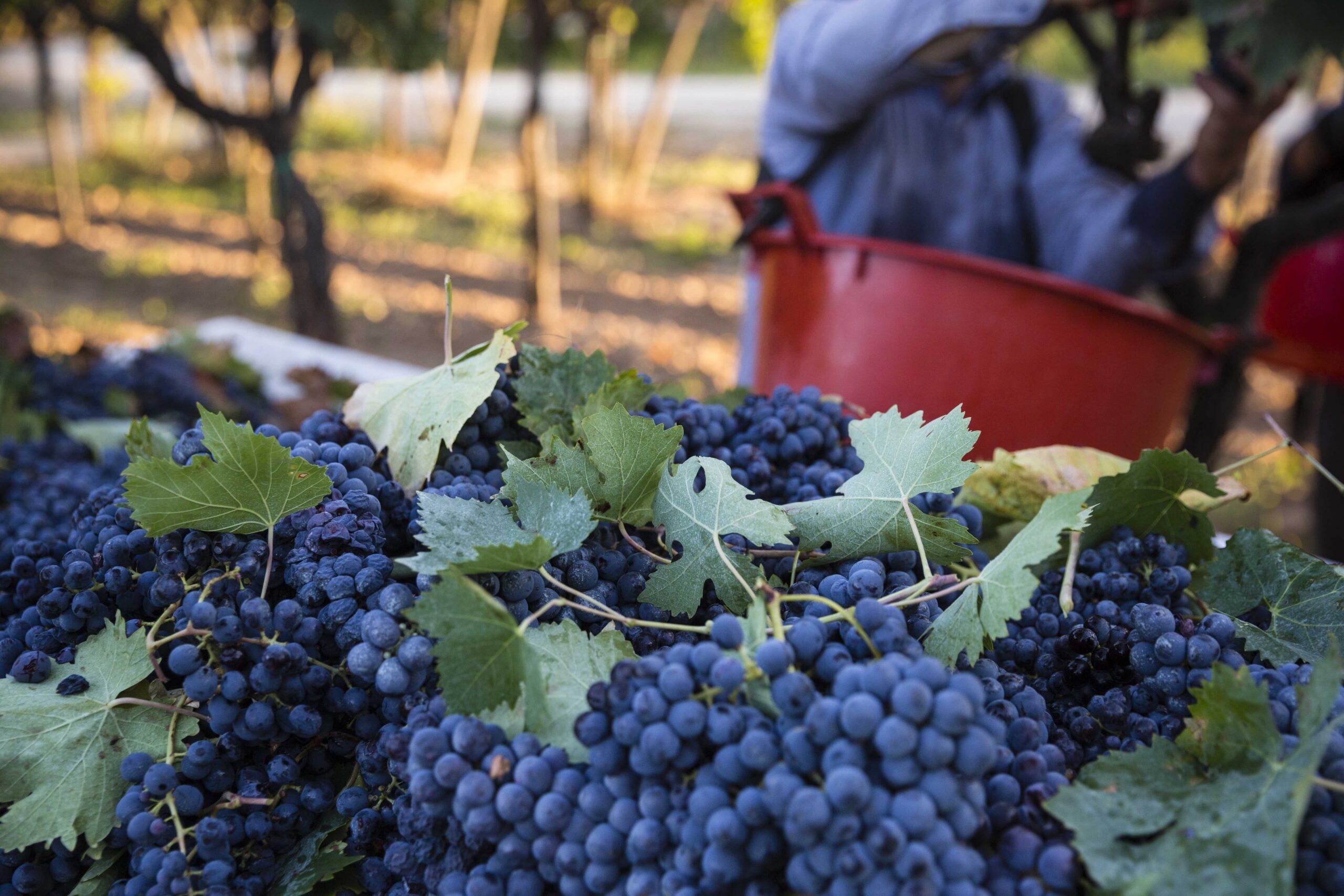
Tuscan wine is a cultural expression, a symbol of the soul of the land. Sangiovese, the region’s signature grape, is at the heart of several outstanding wines: Chianti Classico, marked by its Black Rooster emblem, tells the story of the hills between Florence and Siena with aromas of cherry, violet, and forest floor.
In Montalcino, the same grape gives rise to Brunello, a powerful and refined wine capable of long aging. In Montepulciano, it becomes Vino Nobile, softer and rounder, with notes of plum and spice.
Even in the hills around Montecatini, in Montalbano and Valdinievole, there are characterful wine productions. The vineyards that dot the surrounding slopes yield fresh and aromatic wines, expressions of a privileged territory that benefits from proximity to the sea and shelter from the Apennines.
Of particular note is the Bianco della Valdinievole, a fresh and floral white that pairs perfectly with seafood, a cuisine not traditionally local but interpreted with great quality in Montecatini’s restaurants. It is this blend of tradition and innovation that defines the region’s wine offerings.
Tuscan Cuisine: A Celebration of Simplicity
Tuscan cuisine celebrates simplicity and the quality of raw ingredients. Unsalted bread forms the base of humble but flavorful dishes like panzanella, ribollita, and fettunta, all symbols of peasant philosophy.
Meat dishes, from the famous bistecca alla fiorentina to peposo and tripe, showcase ancient know-how and ingredient respect. Cheeses, especially pecorino, reflect the region’s biodiversity and are often paired with honey and jams for truly authentic sensory experiences.
Montecatini, a crossroads of culinary cultures, offers visitors a complete experience, embracing both rural Tuscan traditions and more refined preparations in line with the spa town’s international vocation.
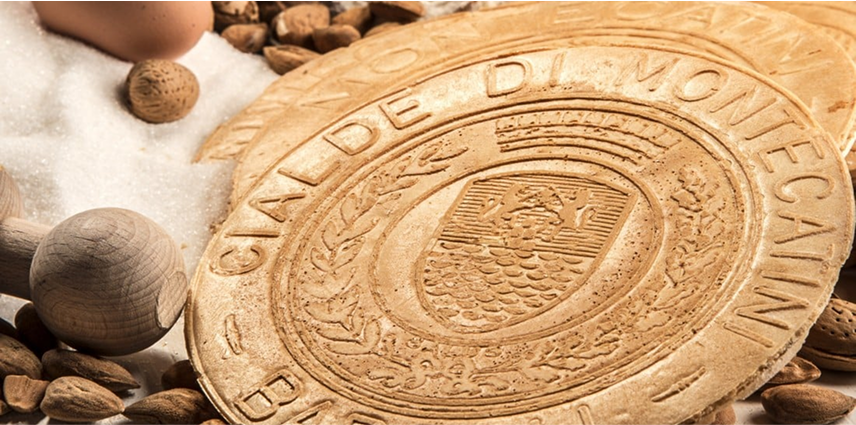
A special mention goes to the “ciacci”, traditional wheat flatbreads cooked on a griddle, delicious both savory and sweet, and of course to the “Cialda di Montecatini”, the city’s signature dessert: two thin, crispy wafers filled with a luscious almond and sugar blend.
Tuscany’s Green Gold
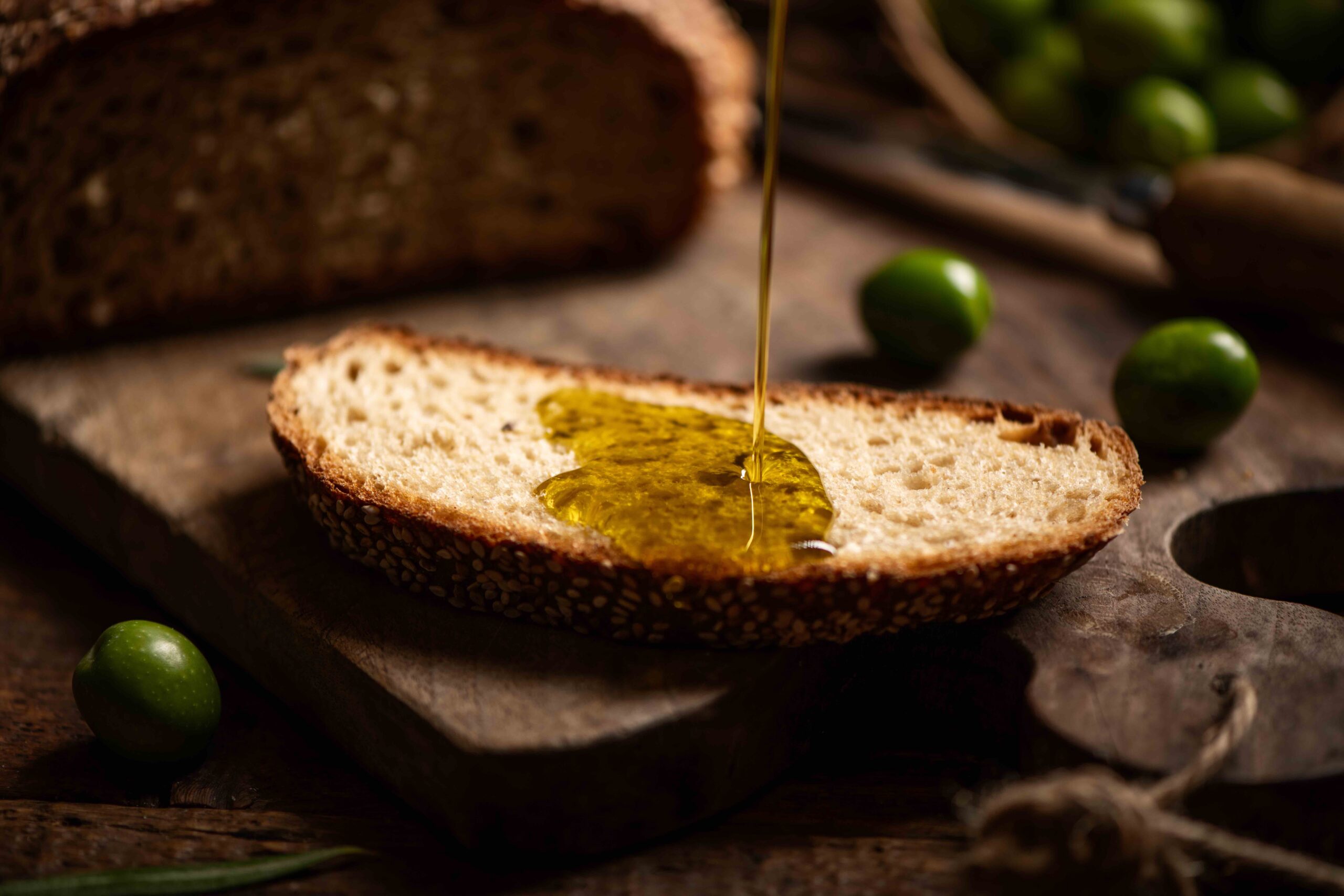
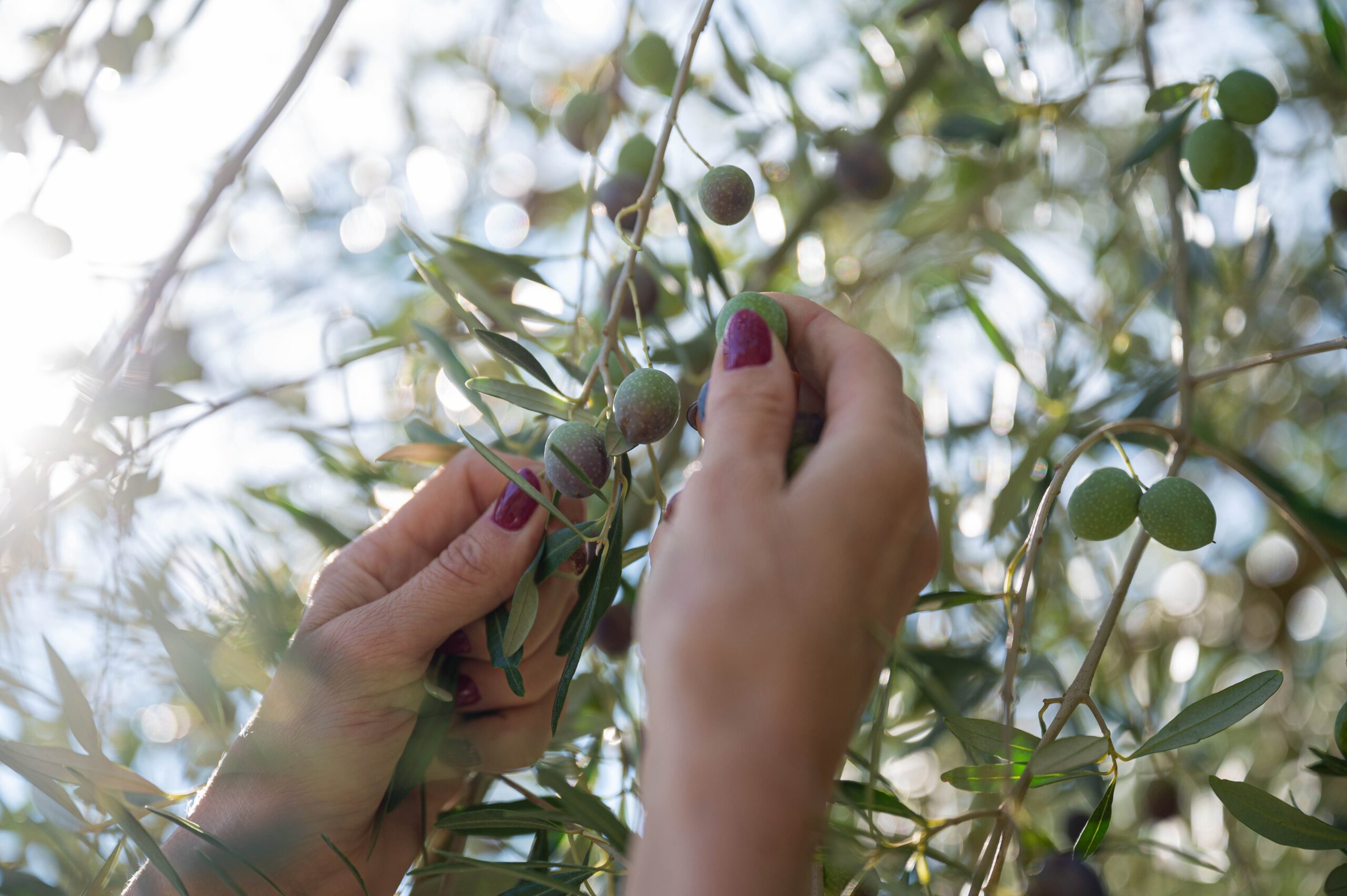
Alongside wine, extra virgin olive oil is the other great liquid treasure of Tuscany. Mainly produced from the Frantoio, Moraiolo, and Leccino cultivars, Tuscan oil stands out for its bold character, with well-balanced bitter and spicy notes, ideal for enhancing simple dishes like soups and bruschette.
Early olive harvesting, a hallmark of Tuscan tradition, ensures oils with a deep green color and complex aromatic profile, with hints of artichoke, freshly cut grass, and almond. These oils are not just condiments, but real ingredients that turn simple recipes into memorable gastronomic experiences.
Near Montecatini, small olive mills still produce oil using artisanal methods: tasting these products is a truly authentic and meaningful experience, a way to understand local culture drop by drop.
A Multisensory Experience
Exploring Tuscany through its flavors means embarking on a sensory journey where taste, landscape, and culture blend into one. Whether it’s a winery tasting, a rustic lunch, or a visit to an olive mill, each experience reveals a piece of the story of this extraordinary land.
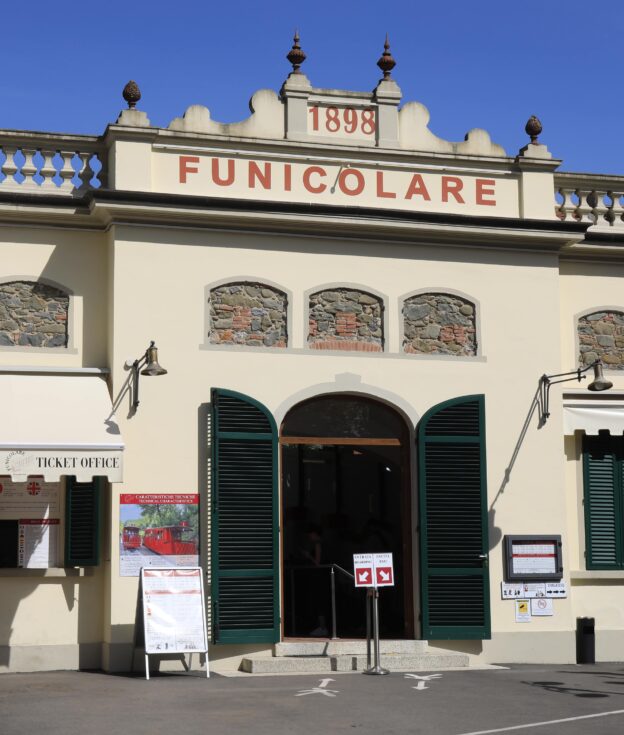
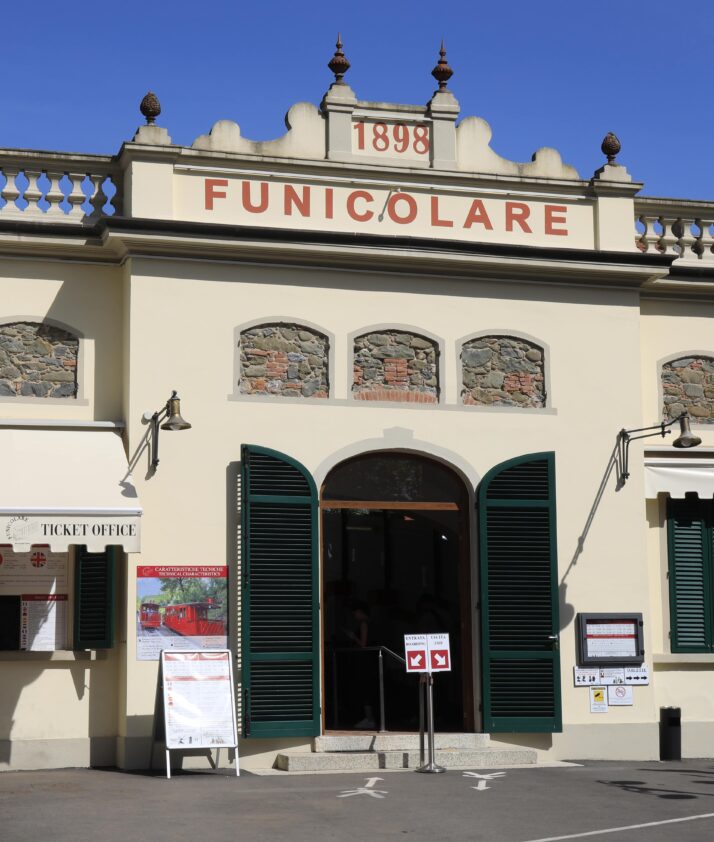
Inaugurated on June 4, 1898, in the presence of the famous composer Giuseppe Verdi, the Montecatini funicular, made up of two carriages, connects the spa town to the picturesque medieval village of Montecatini Alto.
Outdoor Montecatini: between relax and discovery
The territory of Montecatino lends itself magnificently to exploration: panoramic paths wind through centuries-old olive groves and lush vineyards, offering breathtaking views of the Valdinievole.
A journey among the historic Montecatini spas
To stroll through Montecatini’s historic spas is to embark on a journey through time, where water becomes not only a source of well-being but also the inspiring muse of majestic architecture and refined decorations.
The Montecatini area is perfect for exploration: panoramic trails wind through centuries-old olive groves and lush vineyards, offering breathtaking views over the Valdinievole.
Sports facilities scattered throughout the city provide many opportunities for those who want to stay active during their holiday, while nature trails unveil the beauty of a land rich in history and tradition.
Sport in Montecatini Terme
Montecatini Terme has always promoted physical activity and well-being, hosting high-level sports facilities in stunning natural and architectural settings.
The Tennis Torretta stands out in the local tennis scene with its well-maintained courts and elegant atmosphere, reflecting the Italian sporting tradition. Surrounded by greenery, it attracts both local enthusiasts and tourists keen to stay active.
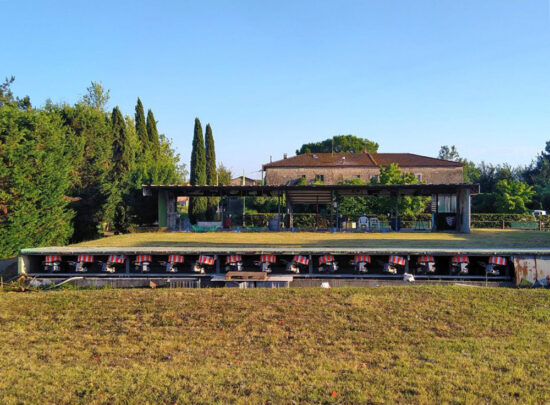
The Sesana Racecourse is a historic reference point for horse racing fans. During the summer season, thrilling harness racing nights draw visitors from across Tuscany, offering exciting spectacles in a unique atmosphere.
Those interested in clay pigeon shooting will appreciate the Montecatini Shooting Range, a professional yet welcoming venue ideal for both seasoned athletes and curious beginners.
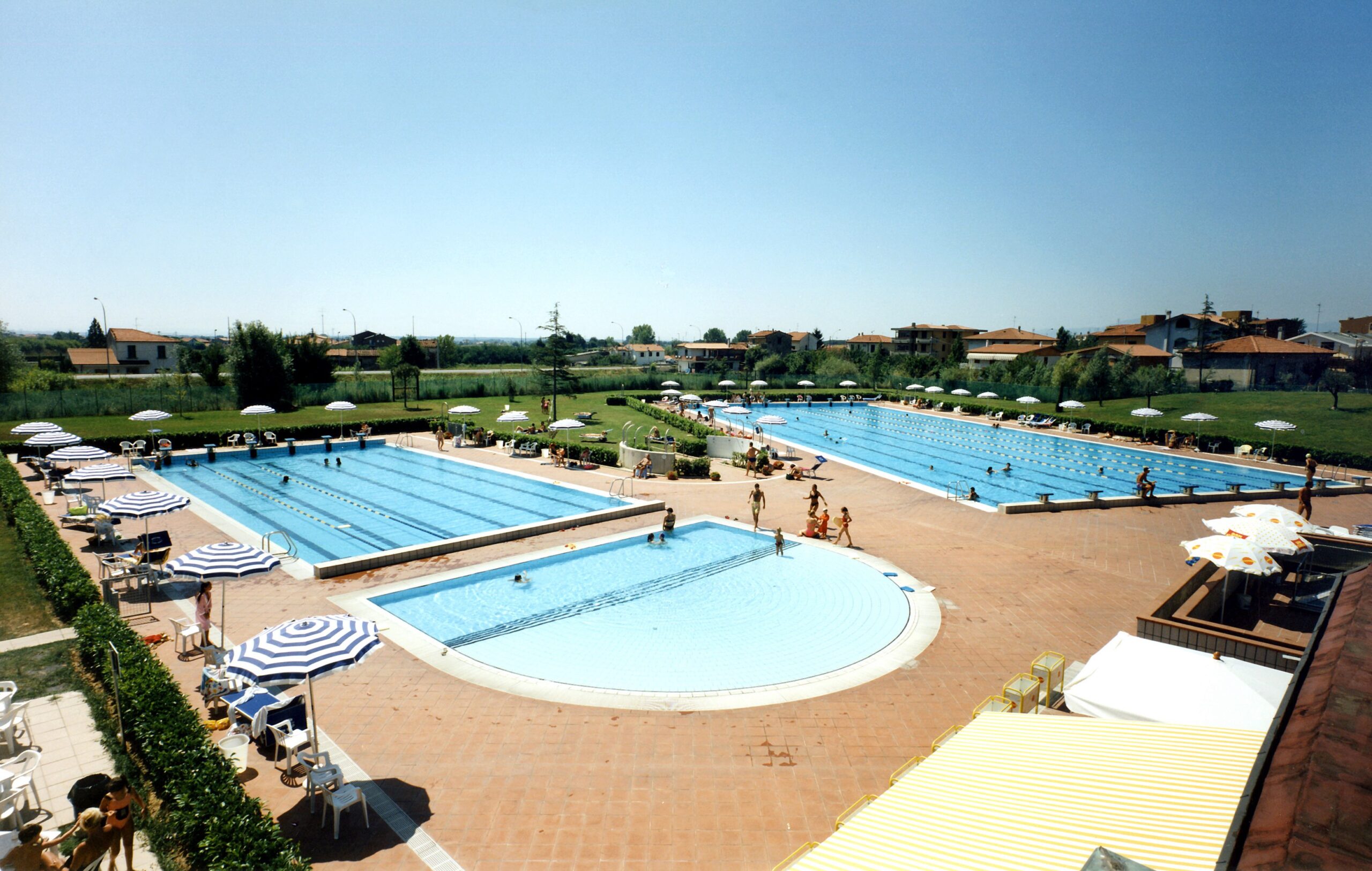
The Municipal Pool, with indoor and outdoor pools, is ideal for swimming all year round. With both indoor and outdoor pools, it offers the possibility of practicing free swimming, attending courses or simply enjoying a moment of aquatic relaxation.
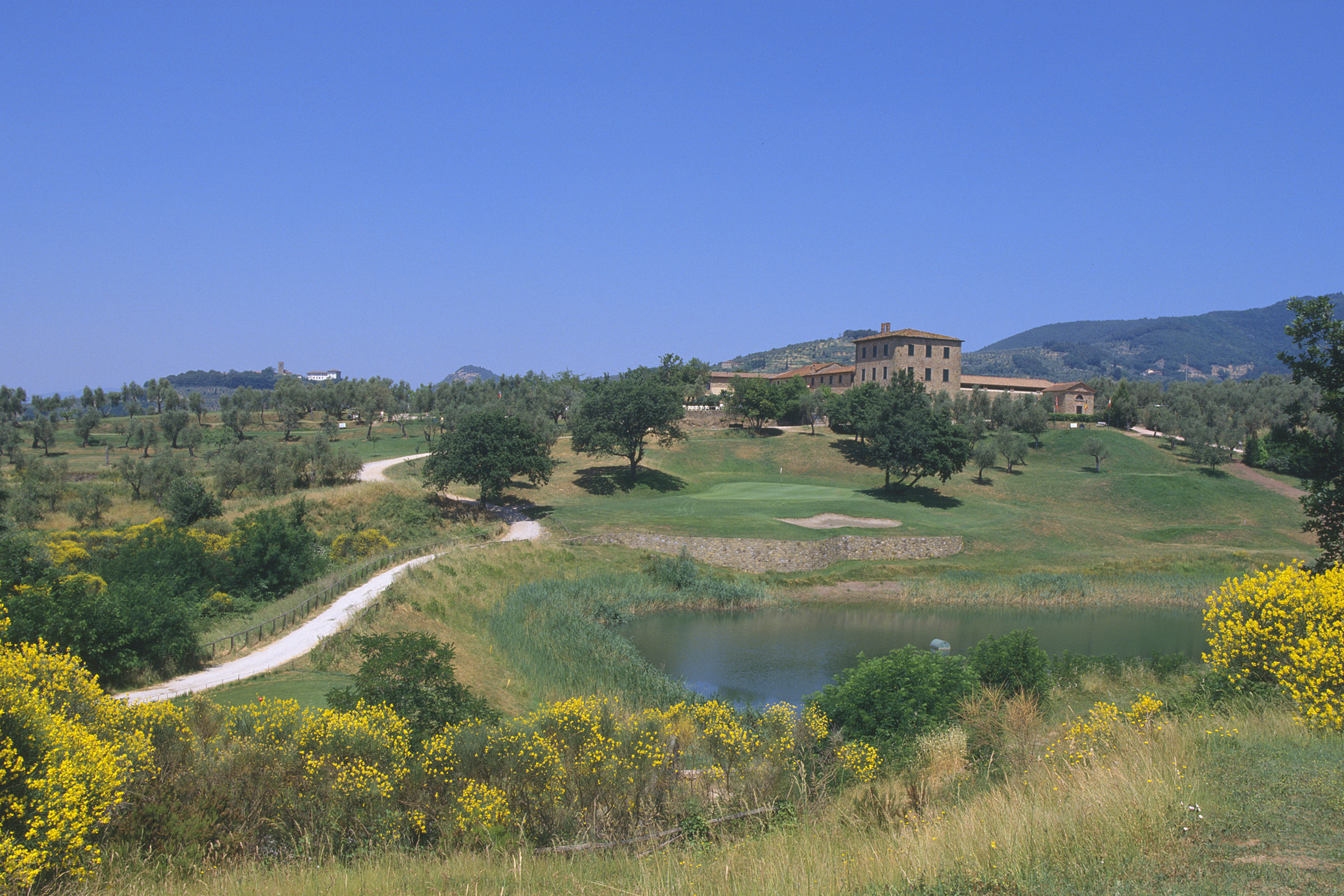
Finally, the Montecatini Golf Club allows golf lovers to test their skills on a carefully designed course, where sport merges with the pleasure of admiring the Tuscan hills.
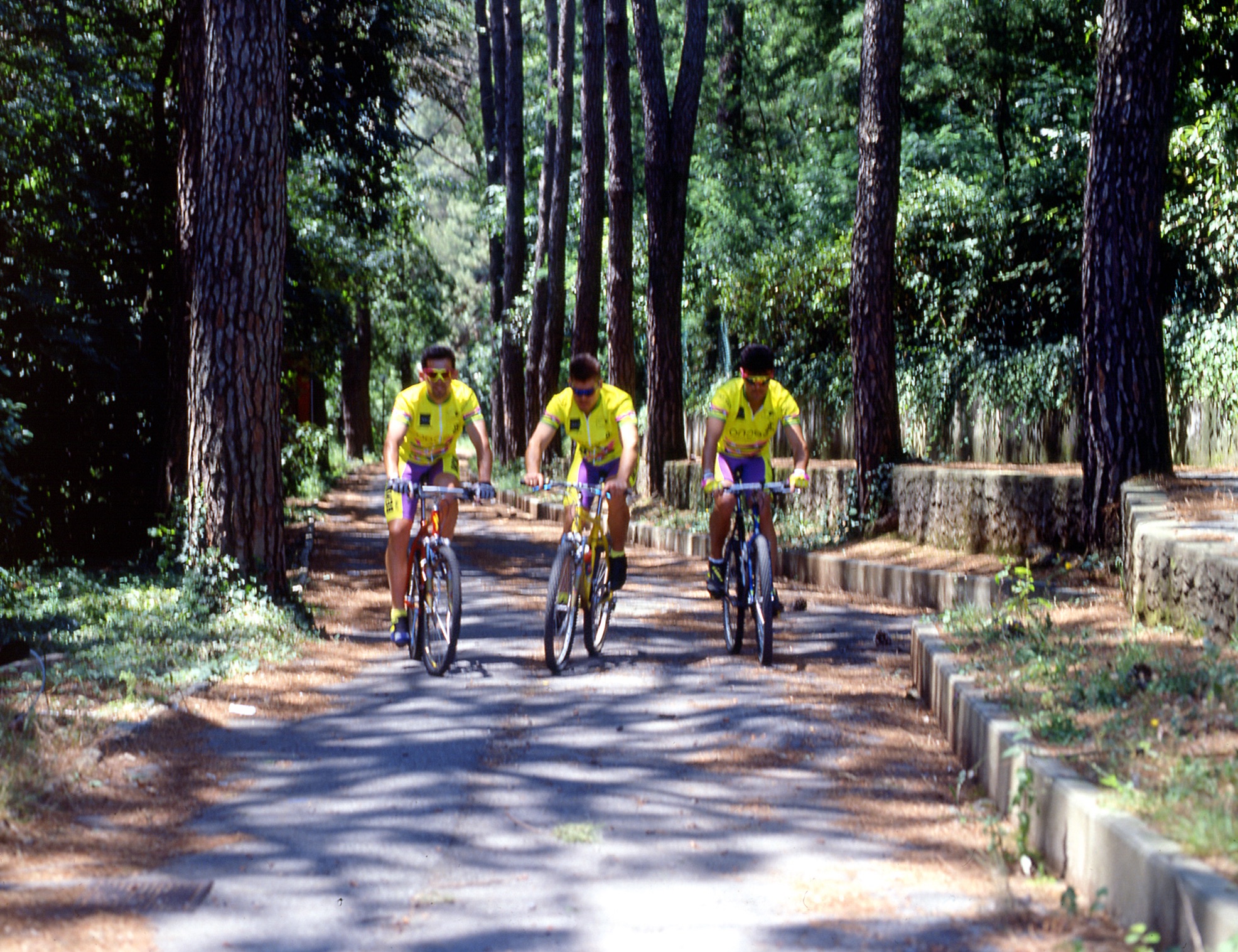
With its mostly flat and gently hilly landscape, the Valdinievole is a paradise for cycling enthusiasts. Montecatini Terme, centrally located, is an ideal base for two-wheeled adventures.
Numerous bike trails depart from the spa town and lead into the surrounding countryside. Routes of varying difficulty allow both experienced cyclists and beginners to enjoy the area’s natural beauty.
The Montalbano hills, for example, offer scenic climbs to ancient villages like Vinci, the birthplace of Leonardo, where unforgettable views blend sport with culture.
Cyclists are well cared for, thanks to bike rentals, specialized repair shops, and bike-friendly rest stops, making the cycling experience in Montecatini accessible and enjoyable for all.
Trekking and scenic trails
Montecatini also offers many opportunities for trekking, with paths suitable for all fitness levels. One of the most popular is the trail to Montecatini Alto, a historic 19th-century route connecting the spa town to its medieval hilltop village.
This gently ascending trail winds through olive groves and Mediterranean scrub, offering ever-changing views of the valley. Just 1.5 kilometers long, it makes for a pleasant 40-minute walk, offering a unique perspective of the city and a charming alternative to the funicular ride.
For those seeking more challenging hikes, there are several trails through woods of holm oaks and chestnut trees, where unspoiled nature reigns supreme.
The Fucecchio Marshes (Padule di Fucecchio), for example, offer nature trails of great interest, especially loved by birdwatchers and nature photographers.
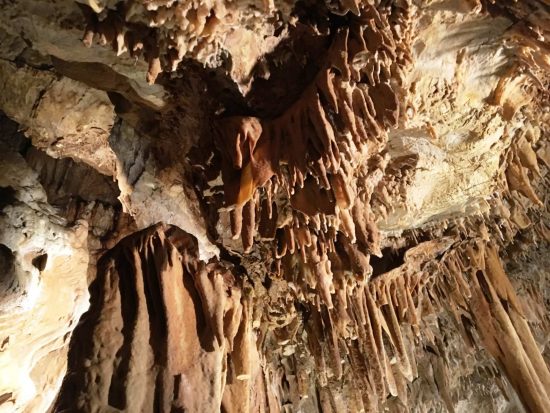
For the more adventurous, Grotta Maona provides a unique underground trekking experience, revealing a hidden world of stalactites, stalagmites, and limestone formations.
Montecatini and its surroundings are perfect for exploring on foot, offering experiences far beyond simple exercise
The Thermal Park, with its shaded boulevards and historic spa architecture, is a peaceful oasis away from the city bustle.
Those looking to combine walking with cultural discovery should not miss Montecatini Alto’s historic center.
In the surrounding area, charming villages like Buggiano Castello, Colle di Buggiano, Massa e Cozzile, and Montecarlo invite visitors to discover the most authentic side of Tuscany, far from the usual tourist paths. Here, among ancient walls, Romanesque churches, and medieval tower houses, time seems to stand still.
These walks offer not only a chance for outdoor activity but also a full immersion into the culture, history, and traditions of a land that still has many stories to tell.
Montecatini Terme: how to organize your vacation in the name of wellness
Here’s how to make the most of your stay, alternating thermal treatments with discovering the local area!
Gestisci Consenso
Per fornire le migliori esperienze, utilizziamo tecnologie come i cookie per memorizzare e/o accedere alle informazioni del dispositivo. Il consenso a queste tecnologie ci permetterà di elaborare dati come il comportamento di navigazione o ID unici su questo sito. Non acconsentire o ritirare il consenso può influire negativamente su alcune caratteristiche e funzioni.
Funzionale
Always active
L'archiviazione tecnica o l'accesso sono strettamente necessari al fine legittimo di consentire l'uso di un servizio specifico esplicitamente richiesto dall'abbonato o dall'utente, o al solo scopo di effettuare la trasmissione di una comunicazione su una rete di comunicazione elettronica.
Preferenze
L'archiviazione tecnica o l'accesso sono necessari per lo scopo legittimo di memorizzare le preferenze che non sono richieste dall'abbonato o dall'utente.
Statistiche
L'archiviazione tecnica o l'accesso che viene utilizzato esclusivamente per scopi statistici.L'archiviazione tecnica o l'accesso che viene utilizzato esclusivamente per scopi statistici anonimi. Senza un mandato di comparizione, una conformità volontaria da parte del vostro Fornitore di Servizi Internet, o ulteriori registrazioni da parte di terzi, le informazioni memorizzate o recuperate per questo scopo da sole non possono di solito essere utilizzate per l'identificazione.
Marketing
L'archiviazione tecnica o l'accesso sono necessari per creare profili di utenti per inviare pubblicità, o per tracciare l'utente su un sito web o su diversi siti web per scopi di marketing simili.