The Naiads, in Greek mythological tradition, were nymphs associated with fresh water, a symbol of beauty and vitality.

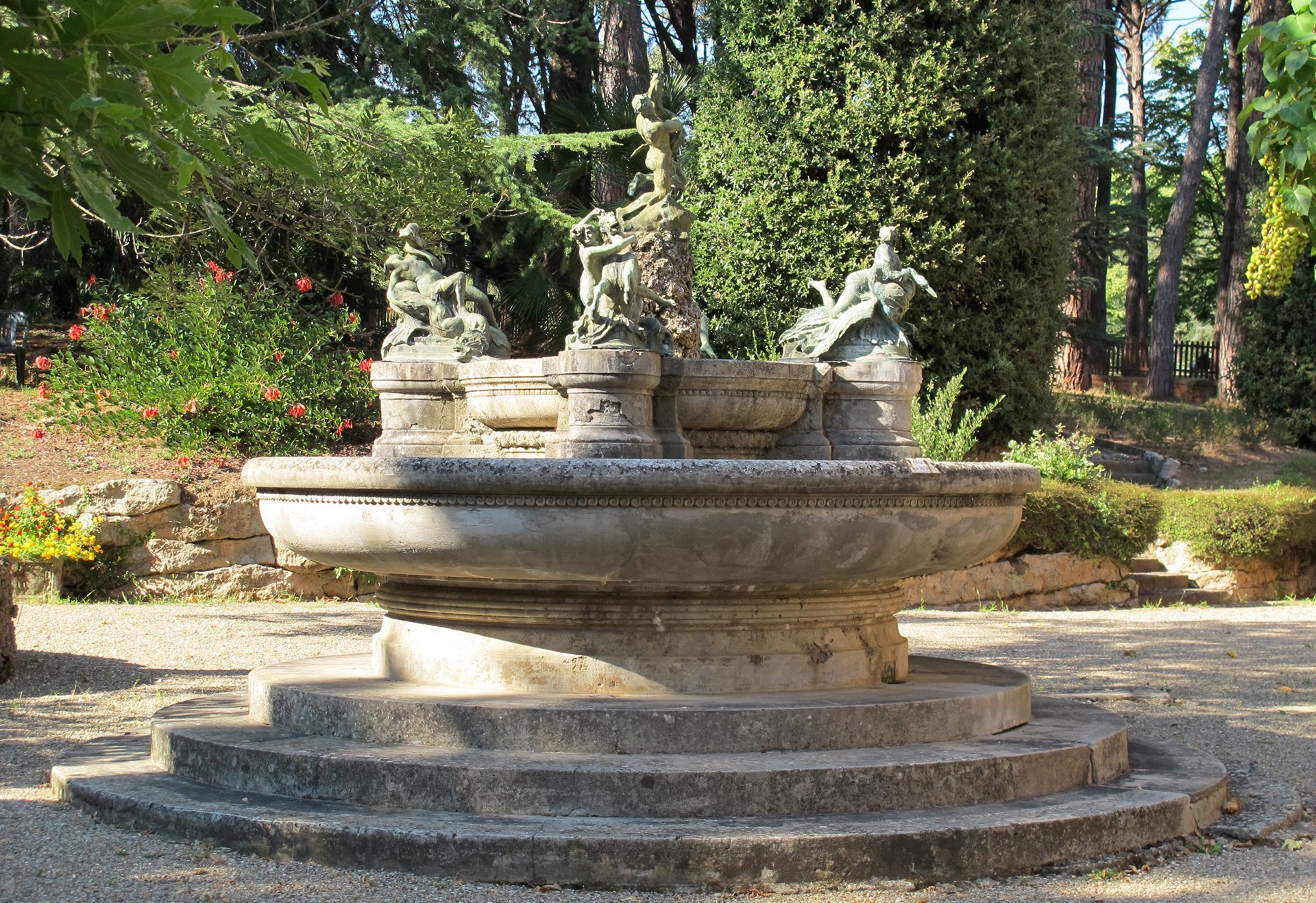
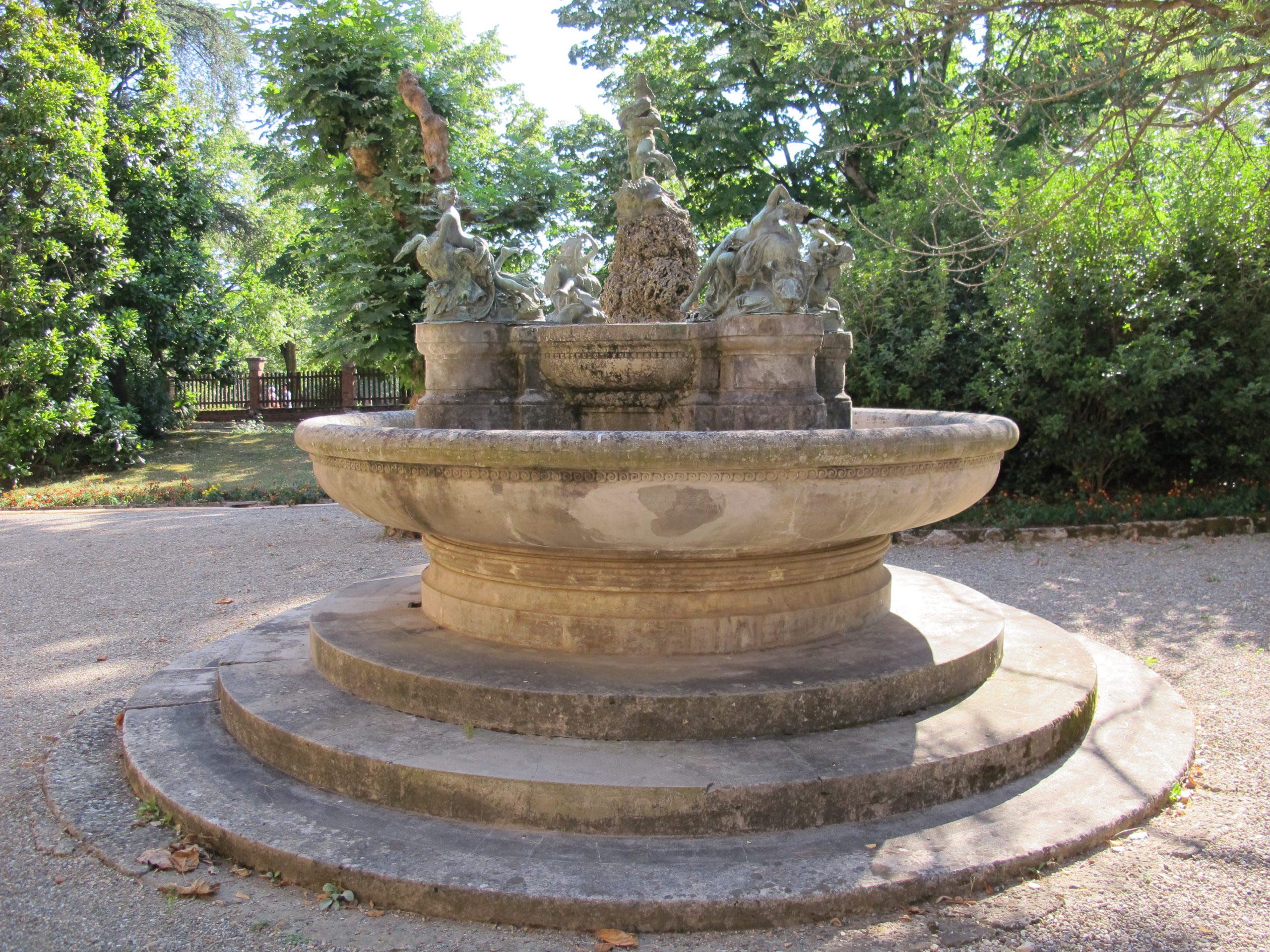
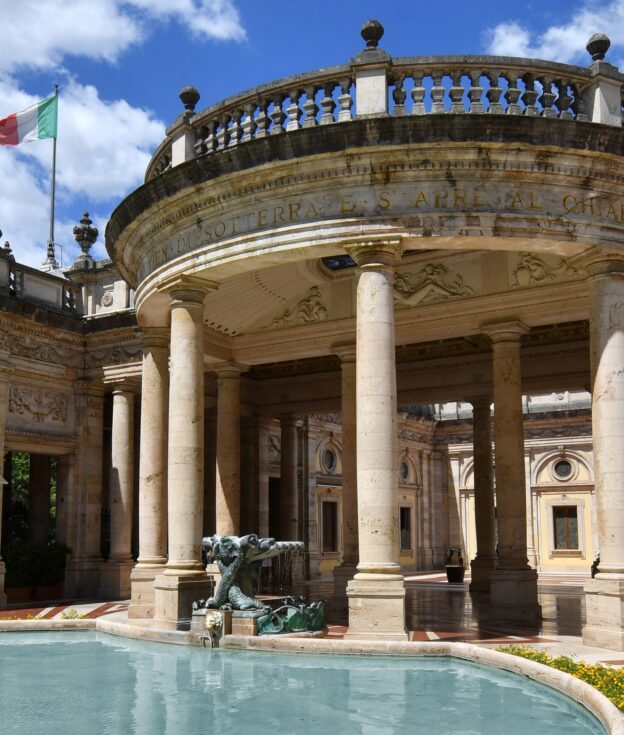
In Montecatini Terme, these legendary figures take shape in an exquisite fountain, located in the striking garden of the Tamerici Establishment.

A work signed by Mario Rutelli

The fountain was created in the 1930s by Palermo sculptor Mario Rutelli, the same author of the famous Fountain of the Naiads in Rome’s Piazza della Repubblica. The one in Montecatini represents a prototype, designed to evoke the purity and benefits of the city’s thermal waters.

Four nymphs, one harmony of water and art

The sculptural composition consists of four bronze female figures lying on travertine bases, each with a specific identity:

  • the Nymph of the Lakes, recognizable by the swan;
    the Nymph of the Underground Waters, riding a dragon;
  • The Nymph of the Oceans, riding a horse;

The River Nymph, lying on a sea monster.

An icon of art in the spa green

Surrounded by greenery and tranquility, the Naiad Fountain represents a perfect blend of nature, symbolism and sculptural art, helping to make the atmosphere of the Tamerici Plant even more fairy-tale and enchanted.


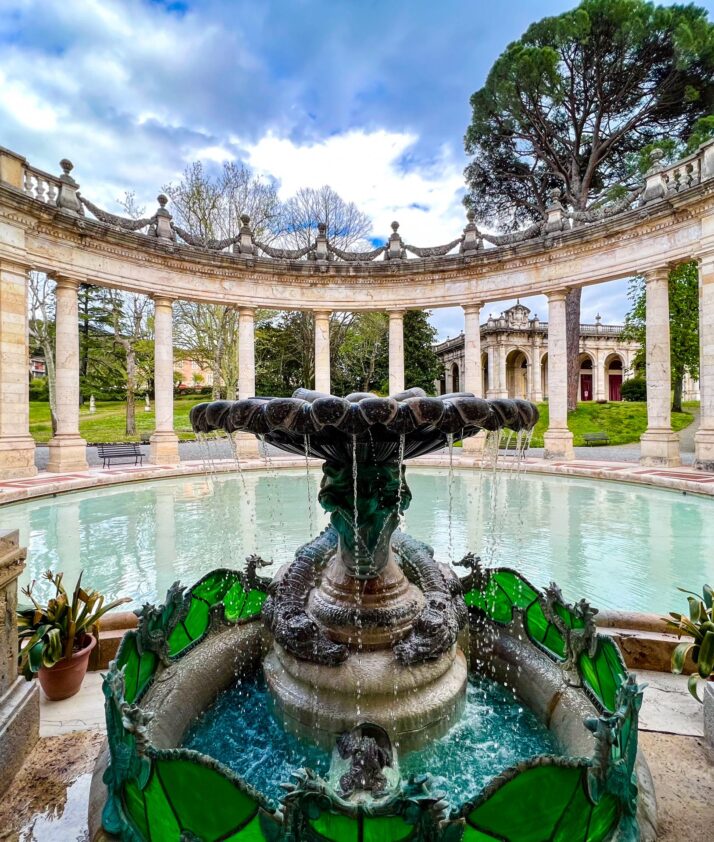
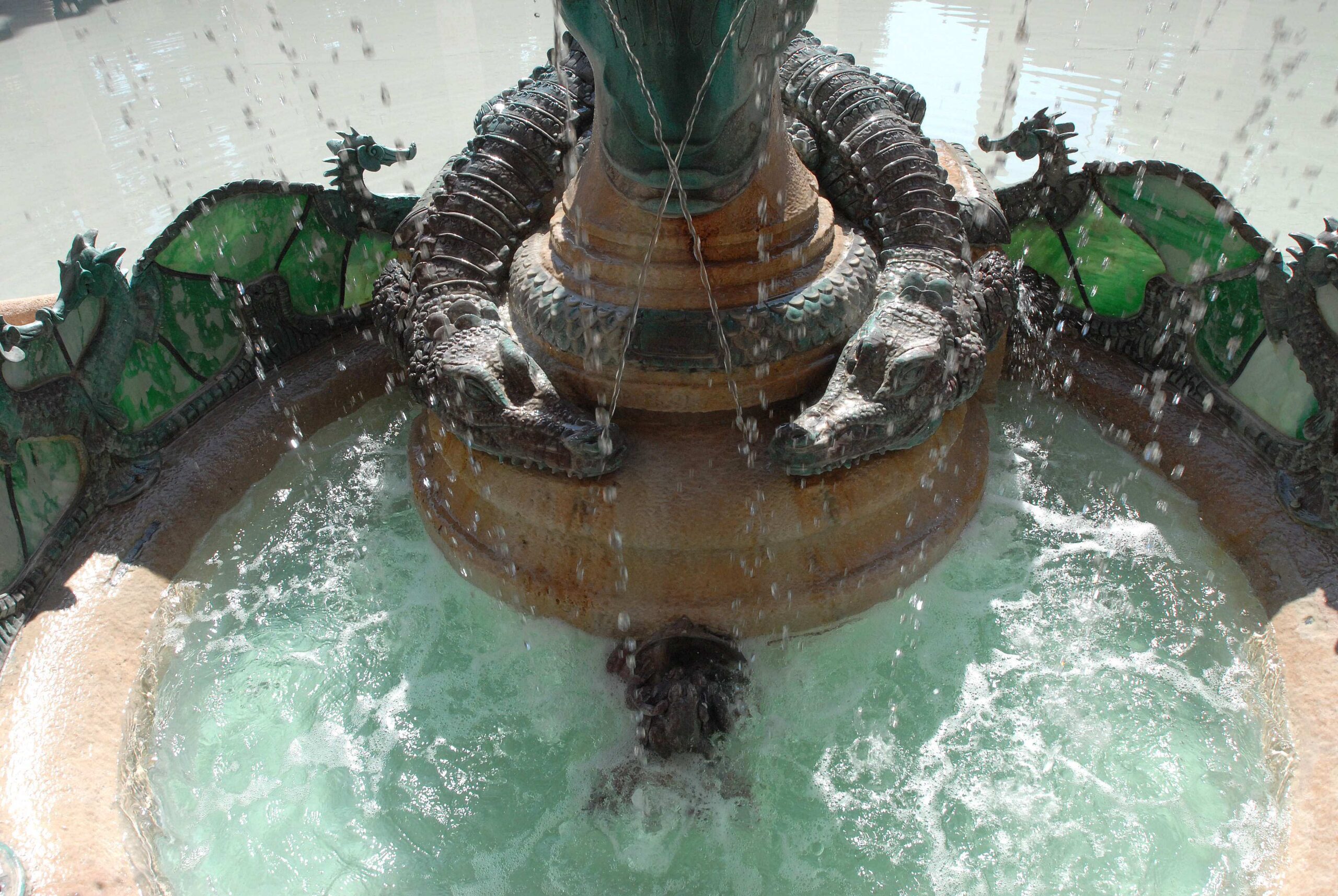
The Crocodile Fountain, considered the symbol of the Tettuccio Establishment, was created by Florentine artist Sirio Tofanari and inaugurated on October 17, 1926, to coincide with the opening of the spa.

This striking fountain features two bronze crocodiles supporting a dark Labrador granite shell. From here, the Tettuccio spring flows into a large circular travertine pool, elegantly decorated with seahorses and green glass blocks.

Restoration and Symbolism

Tofanari’s work benefited from a major restoration in March 2023, sponsored and financed by the Angeli del Bello association of Montecatini Terme. The restoration allowed the base, now damaged by the wear and tear of time, to be rebuilt. The Crocodile Fountain represents a splendid water play that celebrates the magnificence and importance of the spa town’s most representative establishment.


Water is the fundamental element that has allowed Montecatini Terme to thrive over the centuries. The benefits of its thermal springs are celebrated by the many fountains scattered throughout the city’s main squares.

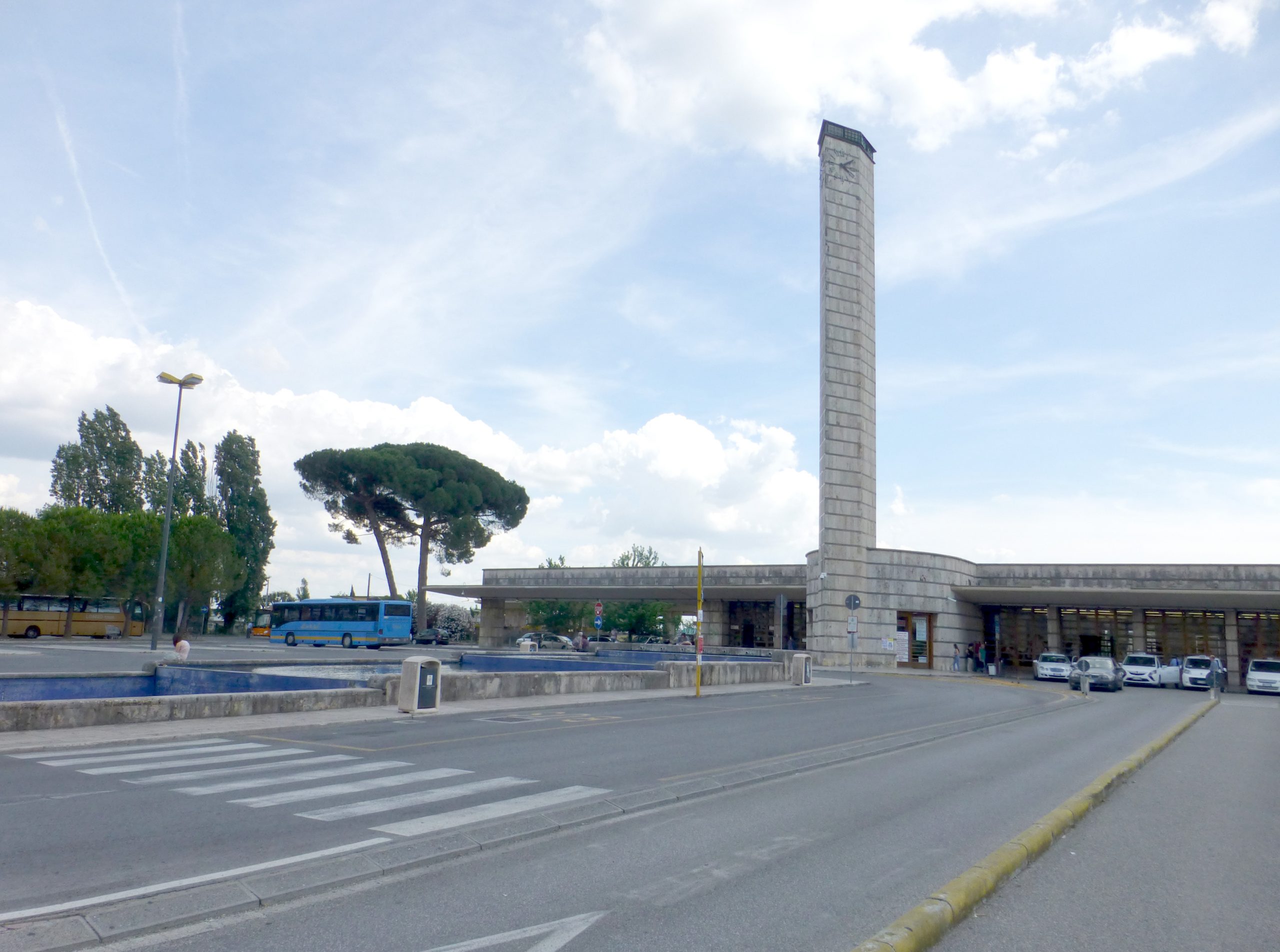
Imagining the Railway Station as a gateway to the city, the first monument that greets the tourist is indeed a fountain, the Mazzoni Fountain.

History and Architecture

This sculpture was built in the 1930s to complete the new railway station, designed by architect Angiolo Mazzoni, after whom the fountain is named. The presence of this imposing monument in the square in front of the station highlights the strong connection between the city and water, which is further enhanced by the details of the fountain itself: a tall tower covered in blue mosaics, surrounded by three sloping basins in which water flows forming small waterfalls.

The station was built between 1933 and 1937 to support the strong expansion that the city experienced at that time, making the only station in Gramsci Square insufficient. In 2016, a project was launched to restore the structure’s waiting rooms, which were opened to the public for the first time during the 2021 FAI Spring Days. The work, overseen by the Superintendency, sought to use the original materials and furnishings as much as possible to be faithful to Mazzoni’s work.


The heron is the symbolic animal of Montecatini Terme, a choice that is also reflected in the prestigious “Golden Heron,” the award given each year to the winners of the “Montecatini International Short Film Festival.”

This film festival is the second oldest and longest-running in Italy, preceded only by the Venice Film Festival.

Symbol of Eclecticism and Identity

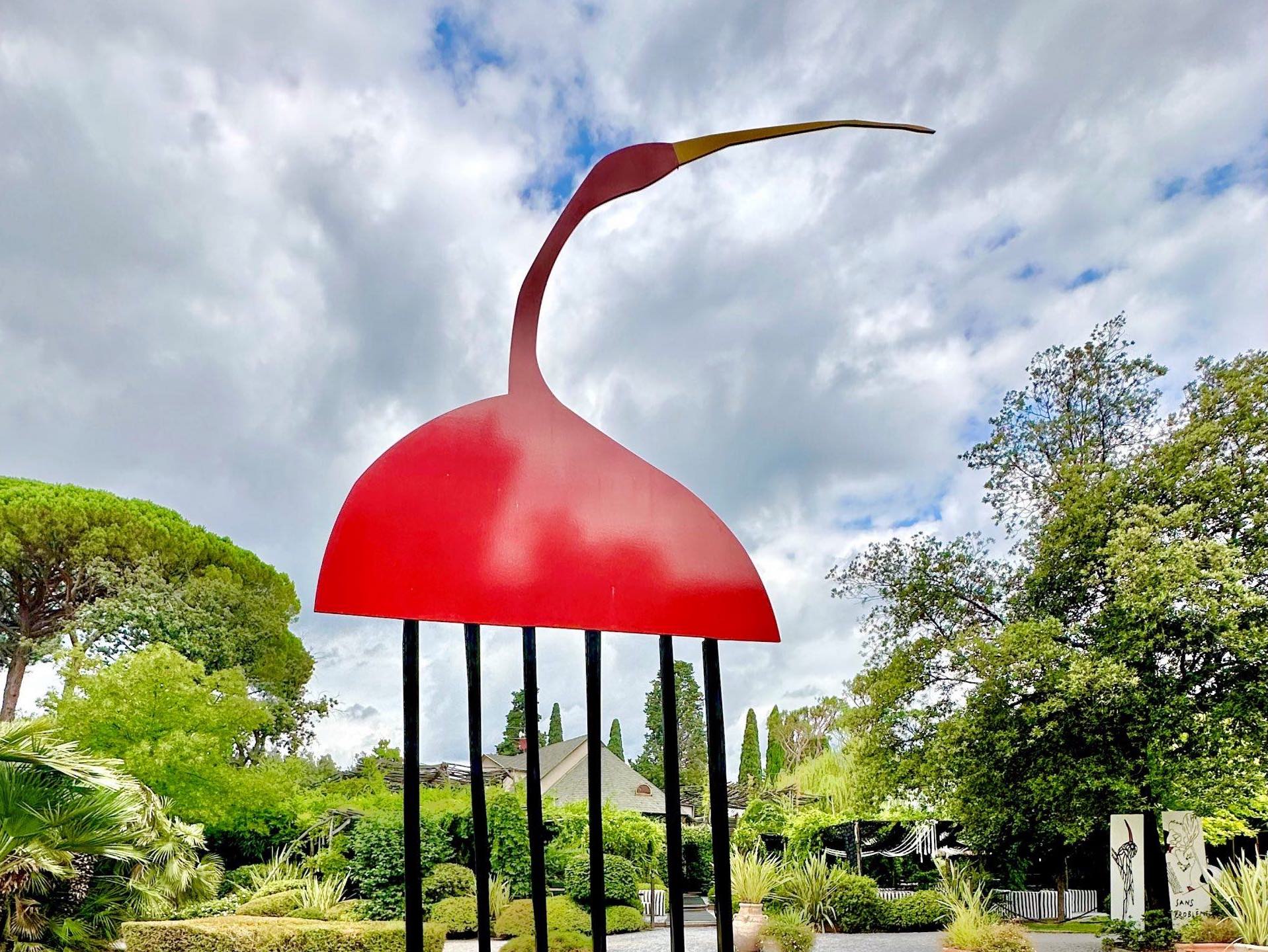
The work titled Red Heron, created in 2003 by Fabio De Poli in collaboration with Mirabili, is located on Verdi Avenue near the City Hall building. The sculpture depicts a stylized steel heron, an intense vermilion color, placed on a rectangular platform that soars its figure. This work perfectly embodies the spirit of Montecatini Terme, not only because the heron is its symbol, but also because of the eclectic style that distinguishes both the sculpture and the city as a whole: a harmonious fusion of styles that makes Montecatini unique.


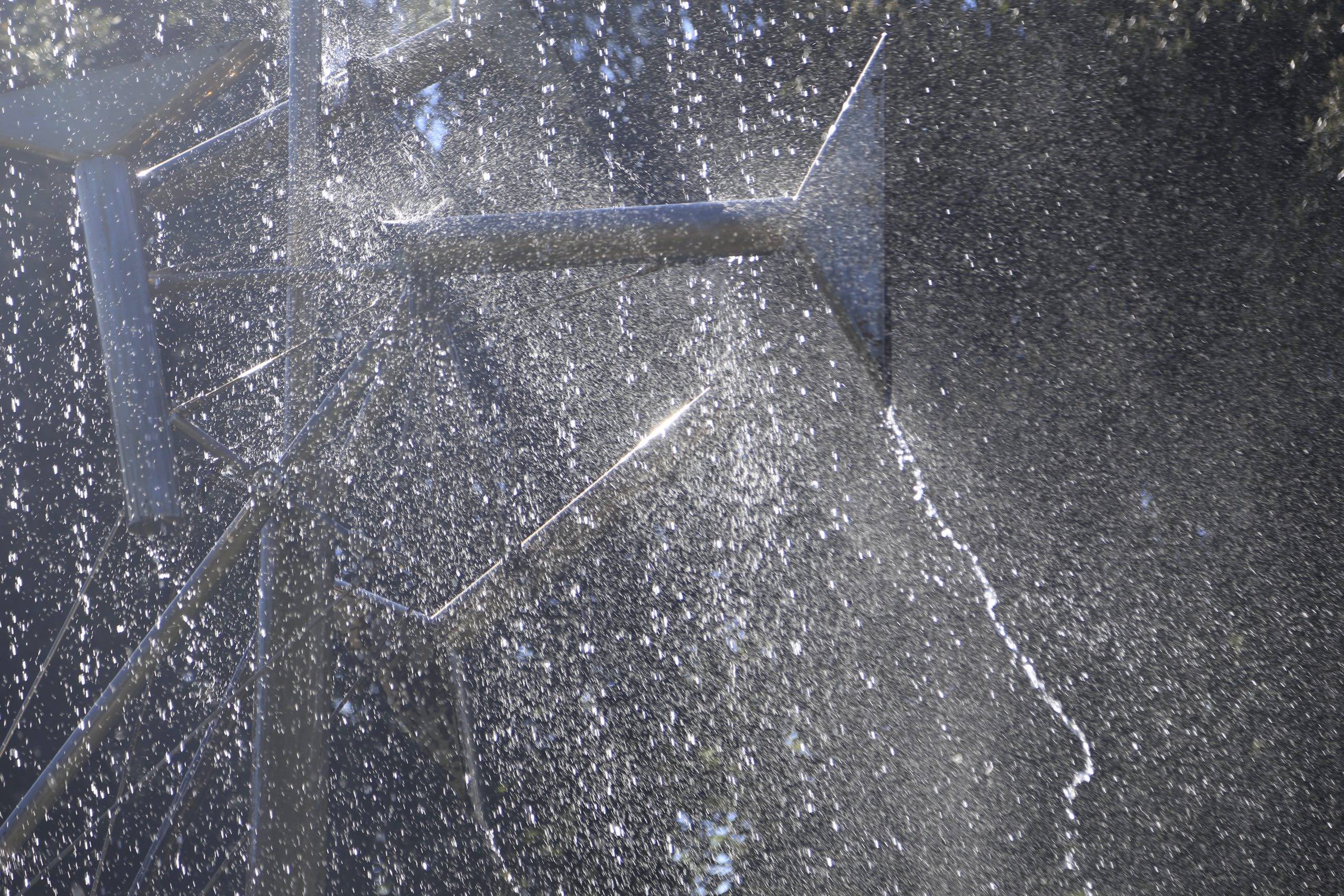
Susumu Shingu’s work, the “Duetto d’Acqua” fountain, was installed in 1998 in the center of the vast flowerbed in Domenico Giusti Square, right in front of the Tettuccio Plant.

Movement, Sound and Water

It is a mobile steel sculpture, about three meters high, whose movements produce a dynamic play of water accompanied by evocative musical effects. Water escapes from two long tubes placed at the apex of the sculpture and flows into the six cup-shaped gears below, activating its circular movement. The roar of the water harmonizes with the melodies played by the work, thus celebrating the prodigious element and its deep connection to the city.
It is an enchanting water feature that welcomes visitors to the most famous of Montecatini Terme’s thermal temples, the Tettuccio.


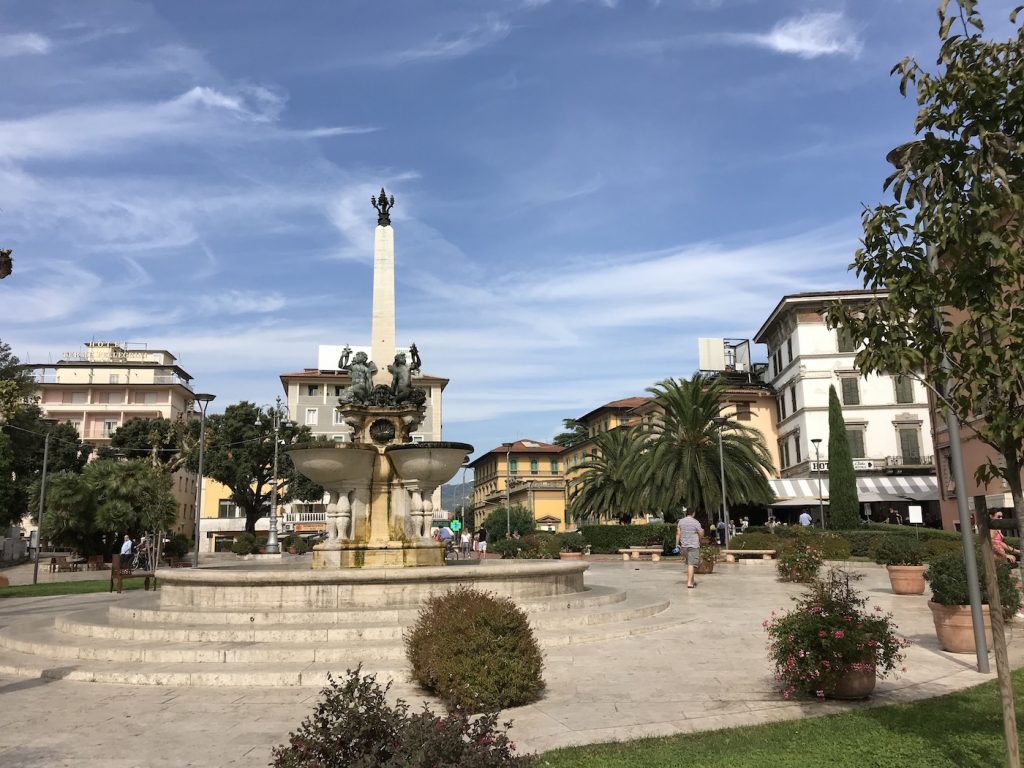
The Monumental Fountain, located in the central Piazza del Popolo, was built in 1926 and designed by architect Raffaello Brizzi.

To create the bronze ornaments, Brizzi enlisted the help of Pistoia sculptor Antonio Guidotti.

History and Composition

Its construction marked the replacement of a pre-existing quadrangular loggia that had hosted agricultural markets and fairs since 1834. The fountain, made of travertine and bronze, consists of a large circular basin. At the top of the latter are putti holding four horns, from which jets of water flow out to feed the basin below.


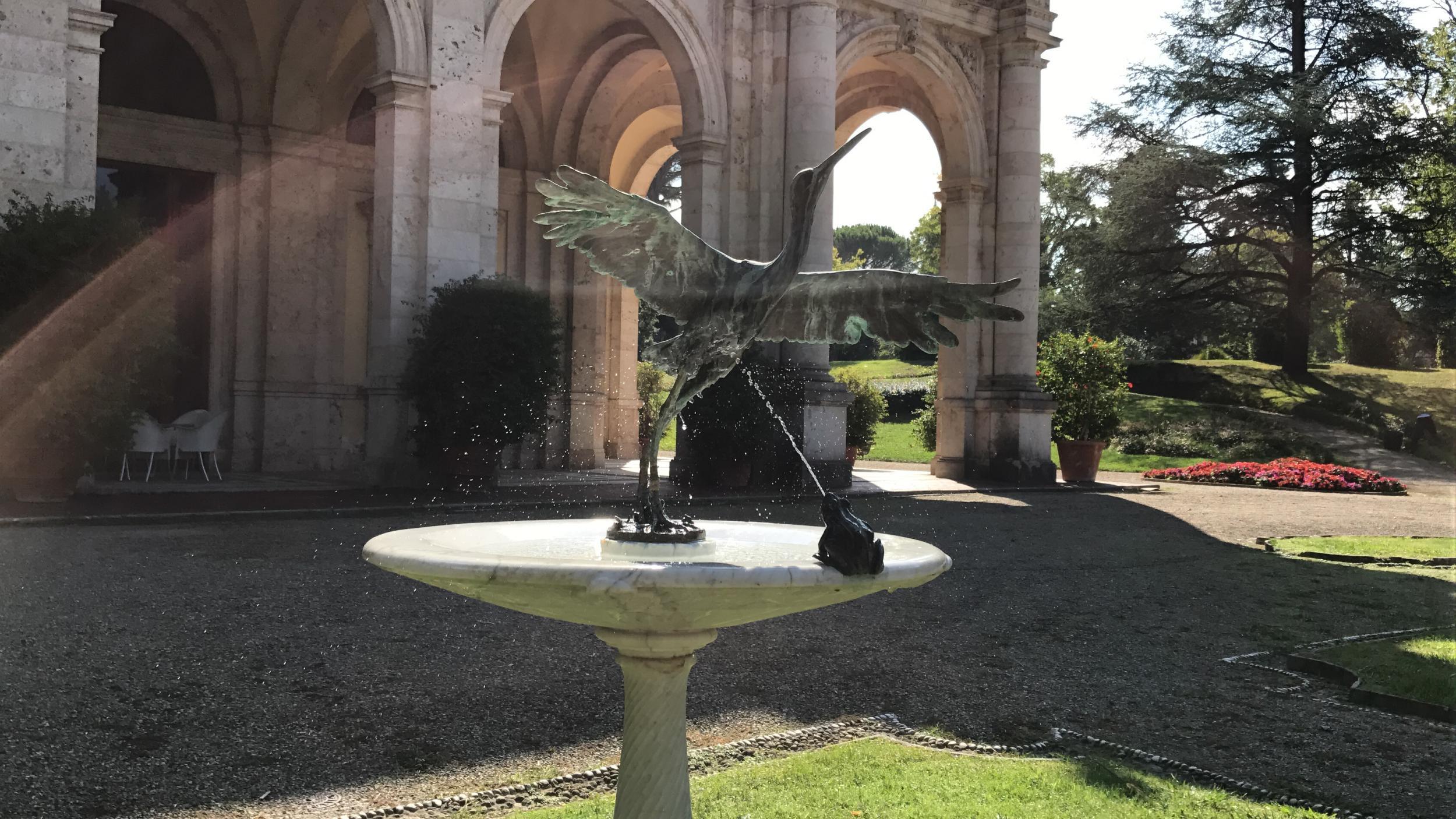
In front of the Regina Establishment, in the luxurious Tettuccio Park, is the fountain of the heron, the symbolic animal of Montecatini Terme, and the frog.

The work of Raphael Romanelli

Created in 1925 by sculptor Raffaello Romanelli, the fountain is an allegory of the evolution of the Valdinievole from a swampy and unhealthy area into an area with renowned beneficial properties precisely because of its thermal waters.

The era of epidemics

Before the great land reclamation, the Valdinievole valley went through a very difficult period: between 1550 and 1756 it was struck numerous times by epidemics and famine precisely because of the thermal waters that rose to the surface and stagnated in the craters.

The enlightened work of the Grand Duke

The reclamation work was promoted by Grand Duke Peter Leopold of Lorraine, who is in fact considered the enlightened founder of the spa complex. The Grand Duke’s merit was to transform the cause of a territory’s malaise into its source of wealth.

The emergence of spas

In 1773 the first establishment, the Bagno Regio, was built, followed in 1775 by the Terme Leopoldine and in 1779 by the renowned Tettuccio.

The legend told to children

A cute nursery rhyme for children, written by Bruna Rossi with illustrations by Maria Chiara Sbolci, tells the story of Montecatini through the heron and the frog: “In that rather damp land you didn’t get warm with fur! It was a bit of a lonely valley, but it had a really diverse fauna.”


Belgian artist Pol Bury’s Water Sculpture is the most recent of several fountains celebrating Montecatini’s deep connection with its renowned hot springs. Installed in 2004 at the Thermal Park near the former Torretta Plant, this work has an interesting history.

It was in fact exhibited as early as the 1970s by the artist at the Guggenheim in New York, only to be generously donated by the Fondazione Cassa di Risparmio di Pistoia e Pescia.

Aquatic Harmonies and Movement

The modern forms of Bury’s sculpture recall Japanese artist Susumu Shingu’s Water Duet, located adjacent to the Tettuccio Plant. Both works feature metal cylinders whose movement, activated by hydraulic force, creates delicate sound effects. Here, too, the sound of water and evocative melody come together in a harmonious hymn to Montecatini’s prodigious hot springs.


Arriving in the central square of Montecatini Alto, it is possible to perceive that intimate atmosphere that characterizes the entire village and that particularly struck Giuseppe Giusti, the Monsumman poet after whom the square is named. A place, therefore, devoted to art right from its name.

A building with a unique character

And it is here that one of the village’s most distinctive buildings is located, the so-called Teatro dei Risorti, which from the mid-18th century became the home of the Accademia dei Filodrammatici. Its eclectic facade certainly makes it the most unique building in the village.

Teatro dei Risorti

The history of the building

The theater developed from the expansion of a 14th-century town-owned building known as the “Loggia del Parlascio,” as assemblies and markets were held here.

The birth of the Theatre of the Risen

The upper floor was occupied, beginning in the early nineteenth century, by the Theatre of the Risen. This name symbolically declared the rebirth to new life of the Filodrammatici, which had decayed during the 18th century.

Teatro dei Risorti

The Stars of Italian Operetta

A number of important performers of Italian Operetta, such as Guido Riccioli, Ettore Petrolini and Fernanda Primavera, performed on the stage of the theater.

The transformation to cinema

During the 1950s, the theater also became a cinema, replacing the stage backdrop with a screen painted white.

A unique historical heritage

The Teatro dei Risorti certainly represents one of the oldest theater spaces in the province of Pistoia, a living testimony to the rich cultural tradition of the area.


This site is registered on wpml.org as a development site. Switch to a production site key to remove this banner.